Antioxidant-Rich Salads for Glowing Skin
2 October 2026
Skin is not a cosmetic surface. It is an organ, the largest one you have, and it renews itself on a schedule that never really stops. What you eat supplies the raw material for that renewal. When dermatologists talk about diet and skin, they are not selling a trend. They are describing biochemistry: collagen synthesis, lipid barrier repair, inflammation control, and defense against oxidative stress. A salad, done thoughtfully, can deliver a concentrated dose of the compounds that support all four.
This article is about building salads that actually do something for your skin. Not just bowls of leaves with a drizzle of oil. We will look at which antioxidants matter, why they matter, how to combine them so they survive digestion and reach the skin, and where most people go wrong.
Why Antioxidants Matter for Skin
Every time your skin is exposed to ultraviolet light, pollution, cigarette smoke, or even normal metabolic activity, it generates free radicals. These are unstable molecules with unpaired electrons. They steal electrons from nearby molecules, which sets off a chain reaction that damages cell membranes, proteins, and DNA. In skin, this shows up as collagen breakdown, uneven pigmentation, dullness, and accelerated wrinkling.Antioxidants neutralize free radicals by donating electrons without becoming destabilized themselves. The body makes some of its own, like glutathione and superoxide dismutase, but it relies on diet for others: vitamin C, vitamin E, carotenoids, polyphenols, and selenium-containing compounds.
Here is the part most articles skip. Antioxidants do not work in isolation. Vitamin C regenerates vitamin E after vitamin E has neutralized a radical. Glutathione recycling depends on selenium and riboflavin. Polyphenols often work by triggering the body's own antioxidant response elements rather than by direct scavenging. This means a salad with one "superfood" is far less useful than a salad with a varied mix of compounds that support each other.
The Skin-Specific Antioxidants Worth Prioritizing
Vitamin C
Vitamin C is a cofactor for two enzymes that stabilize collagen: prolyl hydroxylase and lysyl hydroxylase. Without adequate vitamin C, newly formed collagen is structurally weak. Vitamin C also inhibits tyrosinase, the enzyme that drives melanin production, which is why it is studied for hyperpigmentation.Food sources for salads: red and yellow bell peppers, raw kale, broccoli, tomatoes, and citrus segments. Heat destroys vitamin C, so raw or lightly blanched sources are preferable.
Vitamin E
Vitamin E is a family of eight compounds, with alpha-tocopherol being the most biologically active. It sits in cell membranes and protects the lipid portions of skin cells from oxidation. It works best alongside vitamin C and healthy fats.Food sources for salads: sunflower seeds, almonds, avocado, spinach, and cold-pressed oils used in dressings.
Carotenoids
Beta-carotene, lycopene, lutein, and zeaxanthin are pigments that quench singlet oxygen, a particularly reactive form of free radical. Lycopene from cooked tomatoes is better absorbed than from raw, because heating breaks down cell walls. Lutein and zeaxanthin concentrate in skin and may help with elasticity and hydration.Food sources for salads: tomatoes, carrots, spinach, kale, red bell peppers, and corn.
Polyphenols
This is a broad category that includes flavonoids, phenolic acids, stilbenes, and lignans. They appear in thousands of plant foods. Many polyphenols do not act as direct antioxidants in the body. Instead, they activate Nrf2, a transcription factor that turns on the body's own antioxidant and detoxification enzymes. This is a slower, more sustained effect than direct scavenging.Food sources for salads: red onion, berries, pomegranate seeds, walnuts, green tea used in dressings, and dark leafy greens.
Sulforaphane and Other Isothiocyanates
Found in cruciferous vegetables, these compounds also activate Nrf2 and have been studied for their role in protecting skin from UV damage. They form when the vegetable is chopped or chewed, because the enzyme myrosinase is released and converts glucosinolates into active compounds.Food sources for salads: raw broccoli, broccoli sprouts, cabbage, kale, and arugula. Let chopped cruciferous vegetables rest for ten minutes before eating to maximize sulforaphane formation.
The Absorption Problem Nobody Talks About
You can eat a perfect salad and absorb almost none of its fat-soluble nutrients. Carotenoids, vitamin E, and vitamin K need fat to be absorbed in the small intestine. A fat-free salad is a wasted opportunity.Research on this is consistent: adding a few grams of fat to a salad significantly increases carotenoid absorption. The type of fat matters less than its presence. Olive oil, avocado, nuts, seeds, and full-fat yogurt all work.
There is a trade-off. More fat means more calories. For most people, one to two tablespoons of olive oil or a quarter of an avocado is enough to do the job without turning the salad into a calorie bomb. If you are watching your weight, choose whole-food fat sources like seeds or avocado over large amounts of oil, because they also bring fiber and micronutrients.
Another absorption issue: iron and zinc from plant sources are inhibited by phytates and oxalates. Adding vitamin C to the same meal improves non-heme iron absorption. This is one reason a salad with spinach and bell peppers is smarter than spinach alone.
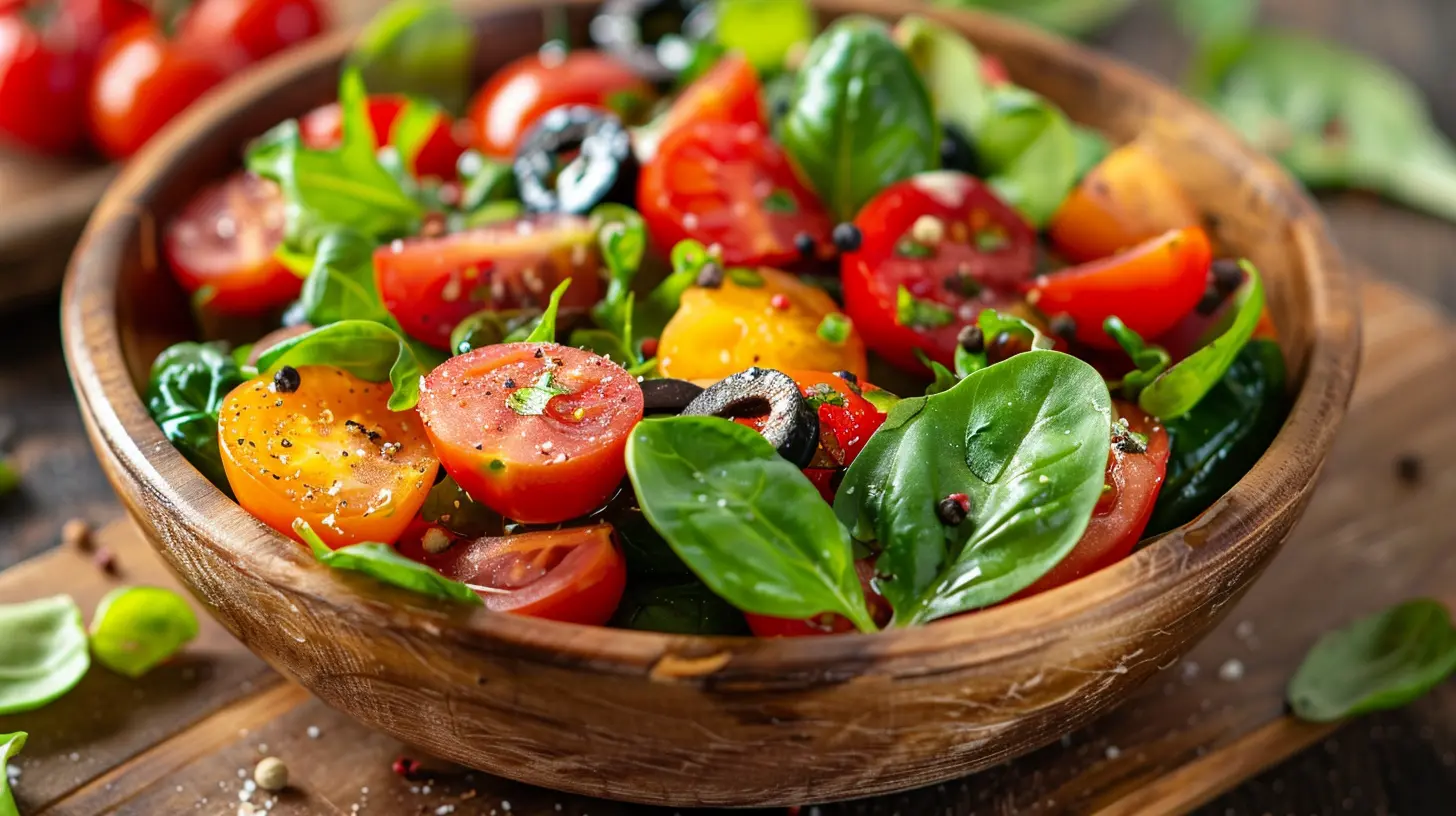
Building the Salad: A Framework
Think of your salad in five layers. Each layer has a job.Layer 1: The Base
Use at least two types of leaves. A single lettuce variety is mostly water and fiber. Mixing in darker greens like kale, arugula, spinach, or watercress adds carotenoids, folate, and glucosinolates.Trade-off: raw kale and cabbage can be tough and may cause bloating in people with sensitive digestion. Massaging kale with a little salt and oil for two minutes breaks down some of the fiber and makes it easier to eat and digest.
Layer 2: The Color
Add at least two brightly colored vegetables. Red bell pepper for vitamin C, shredded carrot for beta-carotene, cherry tomatoes for lycopene, red cabbage for anthocyanins. Color is not a perfect proxy for nutrient content, but it is a reliable starting point because pigments themselves are often bioactive.Layer 3: The Protein
Protein provides amino acids for collagen synthesis. Glycine and proline are especially relevant, and they are found in collagen-rich foods and in eggs, poultry, and fish. Plant options include chickpeas, lentils, edamame, and quinoa.If you eat a salad with no protein, you are getting antioxidants but not the building blocks for repair. This is a common mistake among people who treat salad as a "light" meal.
Layer 4: The Fat
Choose one or two: avocado, olive oil, walnuts, pumpkin seeds, sunflower seeds, tahini, or feta. This layer determines how much of the fat-soluble nutrition you actually absorb.Layer 5: The Boost
This is where you add concentrated antioxidant power: pomegranate seeds, blueberries, dried goji berries, a spoonful of sauerkraut, fresh herbs like parsley and cilantro, or a sprinkle of turmeric with black pepper. Black pepper increases curcumin absorption dramatically, which is a good example of how small additions can change bioavailability.Dressings That Do More Than Taste Good
Most bottled dressings are made with refined seed oils, sugar, and stabilizers. They add calories without much benefit. Making your own takes two minutes and gives you control.A basic formula: one part acid, three parts oil, plus salt and something with umami or sweetness.
Acids: lemon juice, lime juice, apple cider vinegar, red wine vinegar, balsamic vinegar. Citrus juices add vitamin C. Vinegars add polyphenols, especially balsamic and apple cider.
Oils: extra virgin olive oil is the best default because it contains hydroxytyrosol and oleocanthal, two polyphenols with anti-inflammatory activity. Walnut and flax oils add omega-3 fatty acids but go rancid quickly and should be refrigerated.
Add-ins: Dijon mustard helps emulsify and adds selenium. Tahini adds calcium and copper. Miso adds umami and probiotics. Greek yogurt adds protein and creaminess with less oil.
One caution: "extra virgin" is not tightly enforced in every market. Look for a harvest date on the bottle. Oil that is more than eighteen months old has lost much of its polyphenol content.
Sample Salads With Reasoning
The Collagen Support Salad
Base: massaged kale and shredded Brussels sprouts.Color: red bell pepper, cherry tomatoes.
Protein: grilled salmon or edamame.
Fat: avocado and a lemon-olive oil dressing.
Boost: sunflower seeds and fresh parsley.
Why it works: vitamin C from pepper and lemon supports collagen synthesis. Salmon provides omega-3 fatty acids and complete protein. Avocado and olive oil ensure carotenoid absorption. Cruciferous vegetables add sulforaphane precursors.
The Anti-Inflammatory Bowl
Base: arugula and spinach.Color: shredded carrot, red cabbage, pomegranate seeds.
Protein: chickpeas and crumbled feta.
Fat: olive oil and tahini dressing.
Boost: turmeric, black pepper, and walnuts.
Why it works: pomegranate and walnuts provide polyphenols and ALA. Turmeric with black pepper delivers bioavailable curcumin. Feta adds fat and flavor, though it is high in sodium, so use it sparingly if you are watching salt.
The Lycopene and Lutein Salad
Base: romaine and spinach.Color: cooked and cooled tomatoes, corn, orange bell pepper.
Protein: grilled chicken or tempeh.
Fat: olive oil and pumpkin seeds.
Boost: basil and a squeeze of lime.
Why it works: cooking tomatoes increases lycopene availability. Corn and spinach provide lutein and zeaxanthin. The fat from oil and seeds improves absorption of all three carotenoids.
Common Mistakes and Misconceptions
Mistake 1: Assuming all salads are healthy. A salad loaded with croutons, bacon bits, and creamy dressing can have more calories and less nutrition than a sandwich. The ingredients matter more than the category.Mistake 2: Skipping fat. As covered above, fat-free salads waste fat-soluble nutrients. This is one of the most well-documented issues in nutrition.
Mistake 3: Eating the same salad every day. Variety matters because different plants contain different polyphenols, and the gut microbiome responds to diversity. Rotate your greens and colors weekly.
Mistake 4: Over-relying on supplements. Antioxidant supplements, especially high-dose isolated ones like beta-carotene and vitamin E, have shown mixed or even harmful results in some studies. Whole foods deliver compounds in combinations that supplements do not replicate.
Mistake 5: Ignoring total diet. A salad cannot offset a diet high in ultra-processed food, alcohol, and sugar. Skin reflects overall patterns, not single meals.
Misconception: "Detox" salads. The body detoxifies through the liver, kidneys, and gut. No salad "flushes toxins." What salads do is supply cofactors and fiber that support those systems. That is meaningful, but it is not magic.
Misconception: More antioxidants are always better. Antioxidants can become pro-oxidants in high doses, especially isolated ones. Food-based intake is self-limiting in a way that supplements are not.
Practical Tips for Real Life
Prep in batches. Wash and dry greens, chop vegetables, and store them in containers with a paper towel to absorb moisture. A salad you can assemble in three minutes is a salad you will actually eat.Dress at the last minute. Oil and acid break down cell walls and cause wilting. If you are packing lunch, carry dressing separately.
Use frozen and canned wisely. Frozen spinach and berries are picked and frozen at peak ripeness and often retain more nutrients than fresh produce that has traveled for days. Canned tomatoes are excellent for lycopene. Watch for added salt and sugar.
Season aggressively. Herbs and spices are concentrated sources of polyphenols. A tablespoon of fresh parsley, a pinch of oregano, or a dusting of cinnamon on a fruit-based salad adds meaningful antioxidant activity.
Chew well. Cell walls need to be broken to release nutrients. Chewing is the first step of digestion, and it matters more for plant foods than most people realize.
Consider your gut. Polyphenols are metabolized by gut bacteria into smaller, more absorbable compounds. A healthy microbiome improves the return on your salad investment. Fermented foods like kimchi, sauerkraut, and yogurt in or alongside your salad support this.
When Salads Are Not the Answer
If you have a diagnosed skin condition like cystic acne, rosacea, or eczema, diet is a supporting factor, not a treatment. Work with a dermatologist. Salads can help reduce inflammation and support barrier function, but they will not replace medical care.If you have IBS or a sensitive gut, large amounts of raw cruciferous vegetables, onion, and garlic can trigger symptoms. Cooking these vegetables lightly reduces FODMAP content while preserving most nutrients. You lose some vitamin C and sulforaphane, but you gain tolerance. That trade-off is usually worth it.
If you are on blood thinners, keep your vitamin K intake consistent rather than avoiding greens. Sudden increases or decreases in vitamin K can affect INR. Talk to your doctor about how to keep intake steady.
The Bottom Line
Glowing skin is not the result of one miracle ingredient. It is the visible outcome of consistent nourishment: antioxidants that manage oxidative stress, protein for repair, fat for absorption, fiber for gut health, and hydration for barrier function. A well-built salad can deliver all of these in one bowl, but only if you build it with intention.Start with a dark leafy base. Add color. Add protein. Add fat. Add a boost. Make your own dressing. Rotate your ingredients. And remember that the salad is one part of a pattern, not a standalone fix. Do this most days, and your skin will have the raw material it needs to do what it already knows how to do.
all images in this post were generated using AI tools
Category:
Healthy SaladsAuthor:

Jackson Mahoney