Family-Friendly Meal Planning for a More Balanced Table
16 October 2026
Feeding a family is one of those jobs that never really clocks out. You plan a meal, someone refuses to eat it, a meeting runs late, and suddenly everyone is standing in front of the fridge at 7:15 p.m. asking the same question: what's for dinner? Meal planning is the antidote, but not the rigid, spreadsheet-heavy version that collapses the moment life gets messy. The version that actually works for families is flexible, realistic, and built around a few core principles that make balanced eating easier without turning your kitchen into a short-order restaurant.
This guide is for anyone who has tried meal planning and watched it fall apart by Wednesday. It covers why most plans fail, how to build one that survives real life, and how to get everyone at the table eating a wider range of food without nightly negotiations.
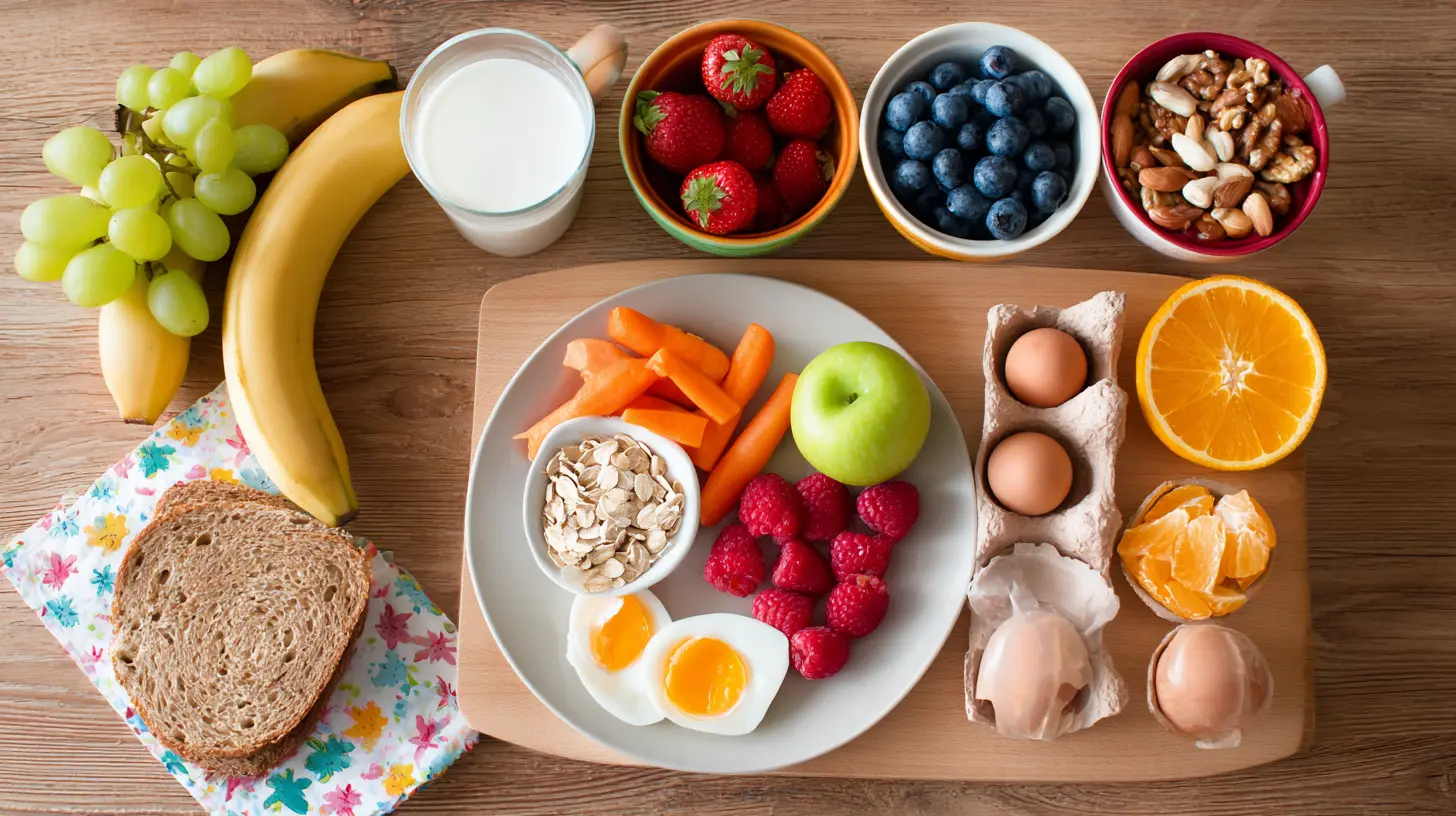
Why Family Meal Planning Fails So Often
Most meal planning advice assumes a level of predictability that few families actually have. A plan built around seven specific dinners, each requiring a unique shopping trip and 45 minutes of active cooking, is fragile. One late workday, one kid's stomach bug, one forgotten ingredient, and the whole system feels broken. Then comes the guilt, and then comes takeout.The second common failure is designing meals around what adults think they should eat rather than what the family will actually eat. A plan full of unfamiliar recipes sounds virtuous on Sunday and looks like a waste of groceries on Tuesday. Balance is not achieved in a single meal. It is achieved across a week, and sometimes across a month.
The third problem is treating the plan as a contract rather than a rough map. A good plan tells you what food is in the house and roughly how it will turn into meals. It does not dictate that Tuesday must be lentil night or else.

The Core Principle: Build a Flexible Framework, Not a Menu
Think of meal planning as setting up a kitchen that can produce a balanced meal on autopilot, rather than scripting every dish. Professional kitchens do this with what is often called a component or modular approach. They prep ingredients and building blocks, then assemble them differently across the week. Home cooks can borrow the same logic at a smaller scale.The framework has three layers:
1. Anchors: three to five dinners you know your family will eat and that you can make without a recipe.
2. Flex slots: two or three nights left open for leftovers, breakfast-for-dinner, a new recipe, or whatever the week throws at you.
3. Building blocks: prepped components in the fridge or pantry that can become multiple meals.
This structure works because it removes the two biggest sources of decision fatigue: choosing what to cook and figuring out whether you have everything. It also naturally supports balance, because you are thinking in terms of categories of food rather than single dishes.
What "Balanced" Actually Means at a Family Table
A balanced meal generally includes a source of protein, a source of carbohydrate, and produce, with fat distributed somewhere in the mix. That is a useful template, not a rule. A bowl of chili with beans, tomatoes, and corn covers protein, carbs, and vegetables in one pot. A plate of pasta with a meat sauce and a side salad does the same thing. A quesadilla with black beans, cheese, and salsa plus a handful of grapes covers it too.The practical takeaway is that you do not need a protein, a starch, and a vegetable prepared as three separate dishes. Many families default to that structure, and it is one reason weeknight cooking feels exhausting. One-pot and one-pan meals often deliver the same nutritional range with far less work.
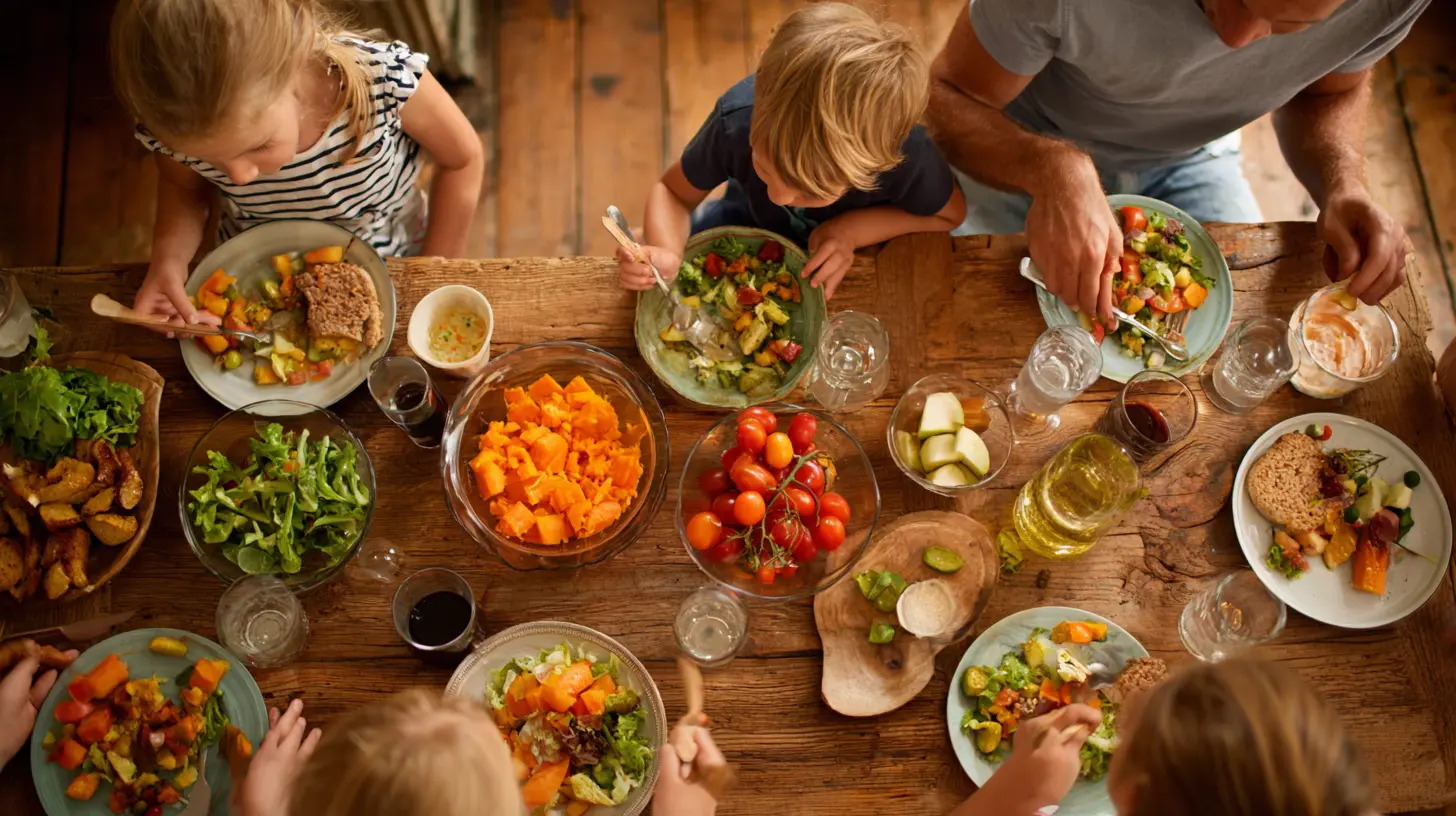
Start With Your Family's Real Eating Patterns
Before writing a single meal down, spend one week noticing what your household actually eats. Not what you wish they ate, and not what a nutrition app says they should eat. What disappears from plates, what gets pushed around, what gets requested, and what time everyone is actually hungry.You will likely find patterns. Maybe breakfast is fine and dinner is the pain point. Maybe weekends are chaotic because everyone eats at different times. Maybe one child eats almost nothing at dinner but eats a huge lunch at school. All of this information matters, because a plan that ignores your family's rhythms will not survive contact with your family.
The Division of Responsibility, Explained Simply
A useful concept from child feeding practice is that adults decide what, when, and where food is served, and children decide whether and how much to eat. This division prevents two common traps: becoming a short-order cook, and turning dinner into a power struggle.Applied to meal planning, it means you plan meals that include at least one food each person generally accepts, and you stop negotiating substitutions. A child who does not want the broccoli can eat the rice and the chicken and be fine. The next meal comes in a few hours. This approach supports balanced eating over time without making every dinner a battle.
It also takes pressure off the plan. You are no longer responsible for ensuring every person eats every food group at every meal. You are responsible for offering a reasonable range across the week.

How to Choose Your Anchor Meals
Anchor meals are the backbone of the plan. They are the meals you can cook from memory, that use ingredients you usually have, and that most of the family eats without complaint. Aim for three to five.To identify yours, ask:
- Which meals do I make most often without thinking?
- Which meals produce leftovers that get eaten?
- Which meals can be scaled up or down easily?
- Which meals take under 30 minutes of active time?
Typical anchors include things like tacos, sheet-pan chicken and vegetables, pasta with a simple sauce, stir-fry, soup, and breakfast-for-dinner. The specific dishes matter less than the fact that they are reliable.
Why Fewer Recipes Often Means Better Eating
There is a counterintuitive benefit to rotating a small set of meals. Repetition builds skill. When you have made a dish fifteen times, you stop measuring, you cook faster, and you can adapt it based on what is in the fridge. That adaptability is what makes weeknight cooking sustainable.Repetition also reduces food waste. If you know you will make tacos twice this week, buying a larger pack of ground meat or a bigger bag of tortillas makes sense. If every meal is a new recipe, you end up with half-used bunches of herbs and partial cans of things that slowly die in the back of the fridge.
The trade-off is boredom, especially for adults. That is what flex slots and small variations are for. Same taco night, different fillings. Same stir-fry method, different vegetables and sauce.
The Role of Building Blocks in a Balanced Week
Building blocks are prepped components that can be combined in multiple ways. They are the difference between a plan that requires cooking every night and one that requires assembly.Common building blocks:
- A pot of grains (rice, farro, quinoa, pasta)
- A tray of roasted vegetables
- A protein cooked plain (shredded chicken, browned ground meat, baked tofu, hard-boiled eggs)
- A sauce or dressing that adds flavor (yogurt sauce, vinaigrette, pesto, salsa)
- Washed and cut raw vegetables for snacking and sides
With these on hand, a "meal" can be a grain bowl, a wrap, a salad with protein on top, a quesadilla, a soup, or a plate of leftovers rearranged. None of these require a recipe, and all of them can be balanced.
When Building Blocks Are Worth It, and When They Are Not
Prepping components works well if you have a predictable chunk of time, like Sunday afternoon or Wednesday evening, and if your family eats a variety of bowl-style meals. It also works well for households where people eat at different times, because components can be assembled on demand.It works less well if your family strongly prefers composed dishes, like casseroles or stews, where the components are already combined. It also fails if you prep things nobody ends up eating. Before you spend two hours chopping, check whether your family actually eats roasted vegetables as a side, or whether they only eat them inside a dish.
A useful middle ground is to prep only what saves you the most time. For many people, that means cooking a large batch of one protein and one grain, and washing produce. Everything else can happen during the cooking window.
Making Room for Picky Eaters Without Losing Your Mind
Picky eating is normal, especially in young children, and it usually improves with repeated, low-pressure exposure to a range of foods. Meal planning can support that process, but only if it does not turn every dinner into a standoff.Three strategies that tend to work:
Include a safe food in every meal. Not a separate meal, just one component you know your child will eat. Bread, rice, fruit, or a raw vegetable they like. This ensures they are not hungry and removes the urgency from the rest of the plate.
Serve new foods alongside familiar ones. A small portion of the new thing, no pressure to eat it. Repeated exposure without pressure is what gradually expands the range of foods a child accepts.
Keep the menu predictable in structure. If your child knows that dinner always includes a protein, a starch, and a vegetable or fruit, the format becomes familiar even when the specific foods change.
What Not to Do
Do not bribe with dessert. It teaches children that the "real" food is the reward and the meal is an obstacle. Do not force bites. It tends to increase resistance over time. Do not make a separate meal for a child who refuses dinner, unless there is a genuine medical or sensory reason. A simple alternative like yogurt or toast is fine as a fallback, but it should not be more appealing than the meal itself, or it becomes the goal.Shopping and Budget: Where the Plan Meets Reality
Meal planning only saves money if the plan matches how you actually shop and eat. A few practical guidelines:- Plan around what is already in your kitchen. Check the fridge, freezer, and pantry before you write the list. This alone reduces waste significantly.
- Buy for the framework, not the recipe. If your anchors are tacos, stir-fry, and pasta, your list should reflect the shared ingredients those meals use.
- Allow for one or two convenience items. Pre-cut vegetables, rotisserie chicken, or frozen grains can be the difference between cooking and ordering out. That is a reasonable trade.
- Keep a running list. Add to it as you notice things running low, rather than trying to remember everything at the store.
The Trade-Off Between Cost and Time
Cheaper ingredients often require more preparation. Dried beans cost less than canned but take hours. Whole chickens cost less per pound than cutlets but require breaking down or roasting whole. There is no universally correct choice. The right answer depends on which resource is scarcer for you that week.A reasonable approach is to spend money to save time on the busiest days and save money on the days when you have more flexibility. This is not a compromise. It is resource management.
Handling the Nights That Go Sideways
Even a good plan will meet a night when nothing goes as expected. Having a small set of "emergency meals" prevents those nights from becoming takeout nights or cereal nights, though both are fine occasionally.Emergency meals are shelf-stable or freezer-based and take under 15 minutes. Examples include:
- Pasta with jarred sauce and frozen vegetables
- Quesadillas with canned beans
- Scrambled eggs with toast and fruit
- Canned soup with added frozen vegetables and leftover protein
- Frozen dumplings with a bag of frozen edamame
The point is not that these meals are gourmet. The point is that they are faster than delivery, cheaper than takeout, and balanced enough to count.
Involving the Family Without Losing Control of the Plan
Getting input from family members increases buy-in, but it can also turn planning into a negotiation. A few ways to involve people without opening the floor to chaos:- Let each person pick one dinner per week from a short list you provide.
- Let kids choose between two options for a side dish.
- Have older children take responsibility for one meal, start to finish.
- Let family members add items to the shopping list within reason.
This works because it gives people a sense of agency without handing over the entire decision. It also teaches kids that meals are a shared project, not a service provided by one person.
Common Mistakes and Misconceptions
Mistake: Planning every meal for every day. This is the fastest route to abandoning the plan. Plan dinners and maybe lunches, and leave breakfast and snacks to routine.Mistake: Trying too many new recipes in one week. New recipes take longer and are more likely to fail. One new recipe per week is plenty.
Misconception: Meal planning means eating the same thing every day. It does not. It means deciding in advance, which frees you from deciding in the moment.
Misconception: A balanced meal must look a certain way. A bowl of soup with beans and vegetables is balanced. A plate with three separate components is also balanced. The format does not matter as much as the range of foods across the week.
Mistake: Ignoring leftovers. Leftovers are the cheapest, fastest meal you will ever make. Build them into the plan deliberately rather than treating them as an accident.
A Sample Week That Shows the Framework in Action
This is not a prescription. It is an illustration of how anchors, flex slots, and building blocks fit together.- Monday: Sheet-pan chicken with potatoes and broccoli (anchor)
- Tuesday: Tacos with ground meat, beans, salsa, and a bag of slaw (anchor, uses leftover chicken if you made extra)
- Wednesday: Flex night. Leftovers or breakfast-for-dinner.
- Thursday: Pasta with a simple tomato sauce, added frozen spinach, and leftover protein (anchor)
- Friday: Stir-fry with whatever vegetables are left, rice from the batch cooked earlier in the week (anchor)
- Saturday: Flex night. Something new, or takeout.
- Sunday: Soup or a larger cooking project that produces leftovers for Monday.
Notice that only a few things were cooked from scratch each night. The rest was assembly, reheating, or repurposing. That is the point.
Making It Stick Over Time
The families who keep meal planning going are not the ones with the most elaborate systems. They are the ones who keep the system small enough to maintain. A plan that takes ten minutes to write and saves you five decisions a week is worth more than a beautiful plan you abandon after two weeks.Review your plan at the end of each week. What worked? What got skipped? What did everyone actually eat? Adjust accordingly. Over a few months, the plan becomes less a document and more a set of habits, and the question "what's for dinner" stops being a source of dread.
A more balanced table does not come from perfect meals. It comes from a kitchen that is set up to produce reasonable meals most nights, with enough flexibility to survive the ones that go sideways. That is a goal worth planning for.
all images in this post were generated using AI tools
Category:
Balanced DietAuthor:

Jackson Mahoney