How to Create Restaurant-Quality Salads at Home
26 August 2026
There is a quiet frustration that comes from spending twelve dollars on a salad bowl at lunch, eating it in four minutes, and then realizing you could have made something better at home for a fraction of the cost. But you probably have tried. And you probably have failed. The leaves were wilted. The dressing was watery. The whole thing tasted like a sad afterthought.
Here is the truth: the gap between a ho-hum homemade salad and a truly excellent restaurant salad has almost nothing to do with expensive ingredients or professional equipment. It has everything to do with technique, timing, and a few counterintuitive choices that most home cooks never consider. This guide will walk you through every layer of building a salad that holds its own against anything from a neighborhood bistro or a high-end gastropub.
Why Restaurant Salads Taste Different
Let us start with the obvious question. Why does the salad at your favorite restaurant taste so much better than the one you make at home, even when you buy the same brand of greens and the same bottle of olive oil?The first reason is salt. Professional kitchens salt their salad components at every stage. They salt the dressing. They salt the greens. They salt the vegetables before adding them. Salt does not just add flavor; it suppresses bitterness, brightens sweetness, and changes the texture of raw vegetables by drawing out moisture and concentrating flavor. Home cooks are often afraid of salt, so their salads taste flat.
The second reason is temperature. Restaurants keep their greens cold and crisp, but not icy. When you pull lettuce straight from the fridge and dress it immediately, the cold dulls your ability to taste the dressing. The oil thickens, the vinegar feels sharp, and the whole thing tastes disjointed. Good restaurants let the greens come up slightly in temperature, just ten minutes out of the fridge, before dressing.
The third reason is the dressing itself. Most restaurant dressings are emulsified properly. That means the oil and vinegar are forced together into a stable, creamy mixture that coats every leaf evenly. A shaken vinaigrette in a mason jar separates within minutes. That separation means you get pockets of sharp vinegar and pockets of slick oil, which is not a pleasant eating experience.
The fourth reason is texture contrast. A great restaurant salad has crunch, chew, creaminess, and freshness all in the same bite. They do not just throw croutons on top. They think about how each element interacts with the others.
None of this requires culinary school. It just requires attention.
The Foundation: Choosing and Handling Greens
The greens are the canvas. If the canvas is bad, no amount of fancy toppings will save the painting. But "bad" does not always mean old or wilted. It often means the wrong green for the job.The Case for Hearty Greens
Most home salads use romaine or iceberg. Those are fine, but they are not what you will find in a great restaurant salad. Chefs often choose a mix of hearty greens like kale, escarole, radicchio, or endive. These greens have more structure, more bitterness, and more personality. They also hold up better to dressing. A delicate butter lettuce will collapse under a heavy vinaigrette, but a chopped kale leaf will absorb the dressing and actually improve over time.If you want to start with one green that delivers restaurant-quality results, choose lacinato kale, also called dinosaur kale. It is flatter and more tender than curly kale. It has a slightly sweet, earthy flavor. And it can withstand a massage.
The Massage Technique
Massaging kale sounds like a spa treatment, but it is a real technique. You strip the leaves from the stems, chop them into bite-sized pieces, then rub them with a pinch of salt and a small amount of olive oil between your fingers for about two minutes. The salt breaks down the cell walls. The oil helps the leaves soften. What was tough and fibrous becomes silky and almost buttery. This is not a myth. It is a chemical reaction that works.You do not need to massage every green. But if you are using kale, collard greens, or even cabbage in a salad, do this step. It takes two minutes and changes everything.
Mixing Textures and Flavors
Restaurant salads rarely use a single green. They mix at least three. A bitter green like radicchio adds depth. A sweet green like butter lettuce adds softness. A crunchy green like romaine adds structure. The goal is to have a base that is interesting on its own, before any toppings.Try this combination: one part chopped lacinato kale, one part torn radicchio, and one part thinly sliced romaine. Massage the kale first, then add the other greens. This base works with almost any dressing and any protein.
The Drying Problem
Wet greens are the enemy of good salad. Water repels oil. If your leaves have water on them, the dressing will not stick. Instead, it will pool at the bottom of the bowl. Restaurants use salad spinners and then pat the greens dry with towels. You need to do the same.After washing, spin the greens thoroughly. Then lay them out on a clean kitchen towel and roll it up gently. Let them sit for five minutes. This extra step removes the last bit of moisture that a spinner cannot get. The result is a leaf that actually holds dressing.
The Dressing: The Soul of the Salad
If the greens are the canvas, the dressing is the paint. This is where most homemade salads fall apart. The bottled dressings from the grocery store are loaded with sugar, stabilizers, and emulsifiers that taste artificial. Homemade dressings are simple, but they require understanding a few basic principles.The Ratio That Works
The classic vinaigrette ratio is three parts oil to one part acid. That is a good starting point, but it is not a rule. Some salads need more acid. Some need less. The real secret is to build the dressing in stages and taste as you go.Start with the acid in a bowl. Add salt and any seasonings. Whisk until the salt dissolves. Then add the oil slowly, in a thin stream, while whisking constantly. This is the old-fashioned way to emulsify. It works, but it takes patience.
The Modern Emulsification Trick
There is an easier way. Use a small amount of Dijon mustard as an emulsifier. Mustard contains lecithin, which helps oil and water bind together. Add half a teaspoon of Dijon to your acid, whisk it in, then add the oil. The dressing will stay creamy for longer.Another trick is to use a blender or immersion blender. Put all the ingredients in a tall cup, blend for thirty seconds, and you will get a thick, stable dressing. This is what many restaurants do. The emulsion is so stable that the dressing will last in the fridge for a week.
The Acid Options
Do not limit yourself to balsamic vinegar. There is a world of acids out there. Red wine vinegar is sharp and clean. Sherry vinegar has a nutty complexity. Champagne vinegar is delicate and bright. Fresh lemon juice is bright and slightly sweet, but it can lose its punch if the dressing sits for too long.A good restaurant trick is to use two acids. One sharp, one mellow. For example, combine lemon juice and sherry vinegar. The lemon gives you immediate brightness. The sherry adds depth. The combination is more interesting than either alone.
The Oil Matters More Than You Think
You do not need to spend forty dollars on a bottle of olive oil. But you do need to buy good oil. The flavor of the oil is the backbone of the dressing. A cheap, harsh olive oil will make your salad taste bitter and rough.Look for extra virgin olive oil that smells grassy or fruity. It should taste slightly peppery at the back of the throat. That pepperiness is a sign of quality. If the oil tastes flat or greasy, do not use it in a salad. Save it for cooking.
For a lighter salad, use a neutral oil like grapeseed or avocado oil. These have a clean flavor that lets the other ingredients shine. You can also mix oils. Half olive oil, half avocado oil gives you flavor without heaviness.
The Dressing Timing
Do not dress the salad until just before serving. Once the dressing hits the greens, the acid starts to break down the leaves. Within ten minutes, the salad will start to wilt. Within thirty minutes, it will be soggy. Restaurants dress salads to order for this reason.If you are meal prepping, keep the greens and the dressing separate. Store the greens in a container with a paper towel to absorb moisture. Store the dressing in a jar. Combine only when you are ready to eat.
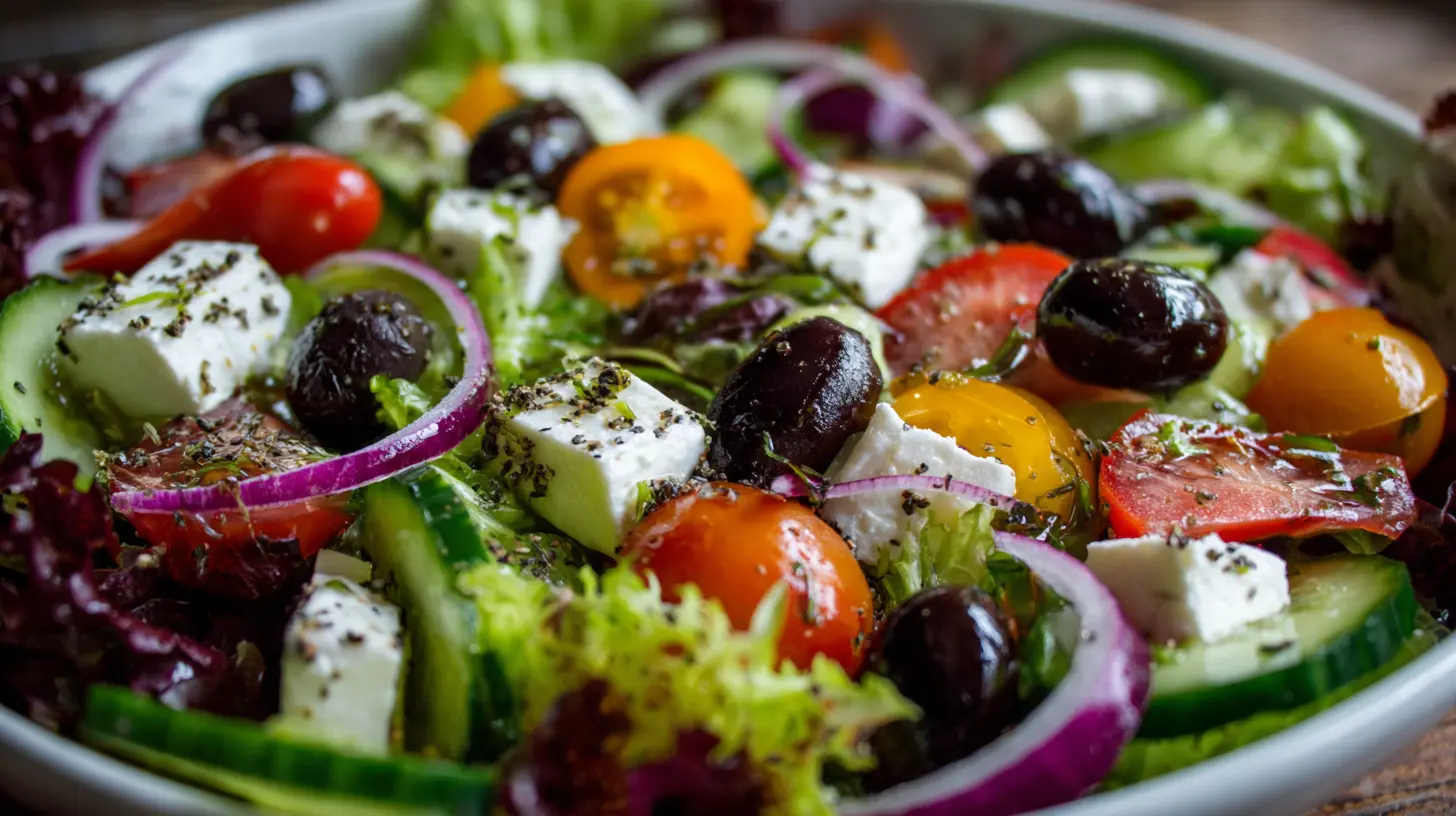
The Texture Layer: Crunch, Chew, and Cream
A salad without texture is a sad bowl of wet leaves. The best restaurant salads have at least three distinct textures beyond the greens. Here is how to build them.The Crunch Element
Croutons are the default, but they are often made poorly. Store-bought croutons are hard, dry, and taste like cardboard. Homemade croutons are easy and dramatically better.Cut a day-old baguette into cubes. Toss with olive oil, salt, and a little garlic powder. Spread on a baking sheet and bake at 375 degrees for ten to fifteen minutes, until golden and crisp. The key is to undercook them slightly. They will continue to crisp as they cool. Overcooked croutons shatter in your mouth and cut the roof of your mouth.
But do not stop at croutons. Toasted nuts and seeds add crunch and flavor. Pine nuts, walnuts, pecans, sunflower seeds, and pumpkin seeds all work well. Toast them in a dry pan over medium heat for two to three minutes, shaking frequently. You will know they are done when they smell nutty. Be careful. They burn quickly.
For a truly unexpected crunch, try crispy chickpeas. Drain a can of chickpeas, pat them dry, toss with olive oil, salt, and smoked paprika, and roast at 400 degrees for thirty minutes. They become crunchy, savory, and addictive.
The Chew Element
Chew comes from ingredients that have a little resistance. Dried fruits are the classic choice. Dried cranberries, cherries, apricots, and figs add sweetness and a pleasant chew. But use them sparingly. A handful is enough. Too many dried fruits will make the salad taste like dessert.Another option is cooked grains. Farro, quinoa, barley, and freekeh add a nutty chew that pairs beautifully with greens. Cook the grains ahead of time and let them cool completely before adding to the salad. Warm grains will wilt the greens.
Cheese also adds a kind of chew, especially aged cheeses like Parmesan, Pecorino, or aged Gouda. Shave them thin with a vegetable peeler so they melt slightly on the tongue.
The Cream Element
Creaminess balances the acidity of the dressing and the crunch of the other ingredients. Avocado is the obvious choice. It adds richness and a silky texture. But avocado can be tricky. If it is underripe, it is hard and tasteless. If it is overripe, it is mushy and brown. The trick is to buy avocados a few days before you need them and let them ripen on the counter. They are ready when they yield slightly to gentle pressure.Soft cheeses like goat cheese, feta, and blue cheese also add creaminess. Crumble them over the top rather than mixing them in. This way, you get pockets of intense flavor instead of a uniform coating.
Hard-boiled eggs are another creamy addition. The yolk adds richness, and the white adds a mild chew. Cook the eggs for exactly nine minutes for a fully set but still tender yolk. Any longer and the yolk becomes chalky.
The Protein: Making It a Meal
A salad can be a side dish, but most people want it to be a meal. Protein is what makes that happen. The mistake is to add protein without thinking about how it interacts with the other components.Grilled Chicken That Is Actually Good
Grilled chicken on a salad is a cliche, and often a bad one. Dry, bland, and rubbery. The problem is overcooking. Chicken breast is lean, and it dries out quickly.The solution is to brine it first. Dissolve a quarter cup of salt in four cups of water. Add a tablespoon of sugar and any herbs you like. Submerge the chicken breast in the brine for thirty minutes to an hour. Then pat it dry, season with pepper and olive oil, and grill over medium-high heat for six to seven minutes per side. Let it rest for five minutes before slicing. The brine keeps the chicken juicy even if you slightly overcook it.
The Seared Shrimp Option
Shrimp cooks in ninety seconds per side. It is forgiving and fast. The trick is to dry the shrimp thoroughly before cooking. Pat them with paper towels until they are almost tacky. Season with salt, pepper, and a pinch of cayenne. Heat a pan over high heat with a little oil. Add the shrimp in a single layer. Do not touch them for ninety seconds. Flip and cook for another sixty seconds. They should be pink, slightly charred on the edges, and perfectly tender.The Canned Fish Solution
Do not underestimate canned fish. Good quality canned tuna, salmon, or sardines are restaurant staples. The key is to drain them well and flake them gently. Mix the flakes with a little lemon juice and olive oil before adding to the salad. This prevents the fish from being dry and ensures it has flavor on its own.The Vegetarian Option
For a vegetarian protein, consider roasted tofu. Press the tofu for thirty minutes to remove excess water. Cut into cubes. Toss with soy sauce, sesame oil, and cornstarch. Roast at 400 degrees for twenty-five minutes, flipping halfway. The cornstarch creates a crispy exterior that holds up well in a salad.
The Assembly: Order of Operations
The order in which you add ingredients matters more than you think. If you toss everything together at once, the heavy ingredients sink to the bottom and the delicate herbs get bruised.Step One: The Dressing Base
Put the greens in a large bowl. Add a few tablespoons of dressing. Toss gently with your hands or tongs. You want the greens lightly coated, not drenched. Taste a leaf. It should have flavor but not be wet.Step Two: The Textural Additions
Add the crunchy and chewy elements. Toss again. This distributes them evenly throughout the salad. No one wants to get a mouthful of nothing but nuts.Step Three: The Protein and Cream
Add the protein and the creamy elements last. Do not toss again. Just place them on top. This keeps the protein from breaking apart and the cheese from melting into the dressing.Step Four: The Final Touch
Finish with a drizzle of olive oil, a squeeze of lemon, and a pinch of flaky salt. These last additions brighten the whole salad and add a final layer of flavor.Common Mistakes and How to Fix Them
Even experienced cooks make these mistakes. Here are the most common ones and the simple fixes.Mistake One: Overdressing
You can always add more dressing, but you cannot take it away. Start with less than you think you need. Toss. Taste. Add more only if necessary.Mistake Two: Cold Ingredients
Straight-from-the-fridge ingredients mute flavor. Let the greens and vegetables sit at room temperature for fifteen minutes before assembling. The dressing will taste brighter and the herbs will be more aromatic.Mistake Three: Ignoring the Herbs
Fresh herbs are the cheapest way to make a salad taste professional. Chopped parsley, cilantro, dill, mint, or basil add a layer of freshness that cannot be replicated. Add them at the very end, just before serving. Herbs bruise easily and lose their volatile oils if handled too much.Mistake Four: Using the Wrong Bowl
A salad bowl should be large enough to toss without spilling. If the bowl is too small, you will crush the greens trying to mix them. Use a bowl that is twice the volume of the salad itself.Mistake Five: Forgetting the Salt
Dressing has salt, but the vegetables themselves need salt too. A pinch of salt on the tomatoes, cucumber, or radishes before assembling draws out their moisture and concentrates their flavor. This is a restaurant technique called seasoning in layers.
The Meal Prep Reality
You can make restaurant-quality salads ahead of time, but you have to be smart about it. The greens should be washed, dried, and stored separately. The dressing should be in a jar. The crunchy elements should be stored in an airtight container. The protein should be cooked and cooled.The key is to assemble the salad right before eating. If you pack a fully dressed salad for lunch, it will be soggy by noon. Instead, pack the greens in one container, the toppings in another, and the dressing in a small jar. Combine at your desk. This takes an extra minute but makes a world of difference.
The Final Word
Restaurant-quality salads are not about fancy ingredients or complicated techniques. They are about respect for the components. Dry your greens. Season your dressing properly. Toast your nuts. Cook your protein correctly. Assemble in the right order. That is it.Once you internalize these principles, you will never look at a sad desk salad the same way again. You will know that a great salad is not an accident. It is a series of small, deliberate choices that add up to something memorable. And you can make those choices in your own kitchen, any night of the week.
all images in this post were generated using AI tools
Category:
Healthy SaladsAuthor:

Jackson Mahoney
Discussion
rate this article
1 comments
Alexia McLaury
I love these tips! Fresh ingredients and simple dressings make a huge difference. Can't wait to try these salad ideas.
August 27, 2026 at 4:47 AM