How to Turn a Salad into a Complete Meal
22 October 2026
A bowl of leaves with a splash of dressing is a side dish. It can be fresh and pleasant, but it will not keep you full for long, and it will not give your body what it needs to function well through the afternoon. Turning that same bowl into a complete meal is not complicated, but it does require a shift in how you think about salad construction. You are not just assembling vegetables. You are building a balanced plate that happens to be served cold, or warm, in a bowl.
I have spent years watching people make the same mistakes with salads. They either pile on so many toppings that the bowl becomes a calorie bomb disguised as health food, or they go the opposite direction and eat a sad collection of cucumber and lettuce that leaves them raiding the pantry an hour later. Neither approach serves you. The goal is a meal that satisfies hunger, supports energy, and tastes good enough that you actually want to eat it again tomorrow.
This article walks through the principles of building a complete salad meal, from the foundation of macronutrients to the practical details of texture, temperature, and dressing. It covers common misconceptions, trade-offs between different approaches, and specific examples you can adapt to your own preferences and dietary needs.
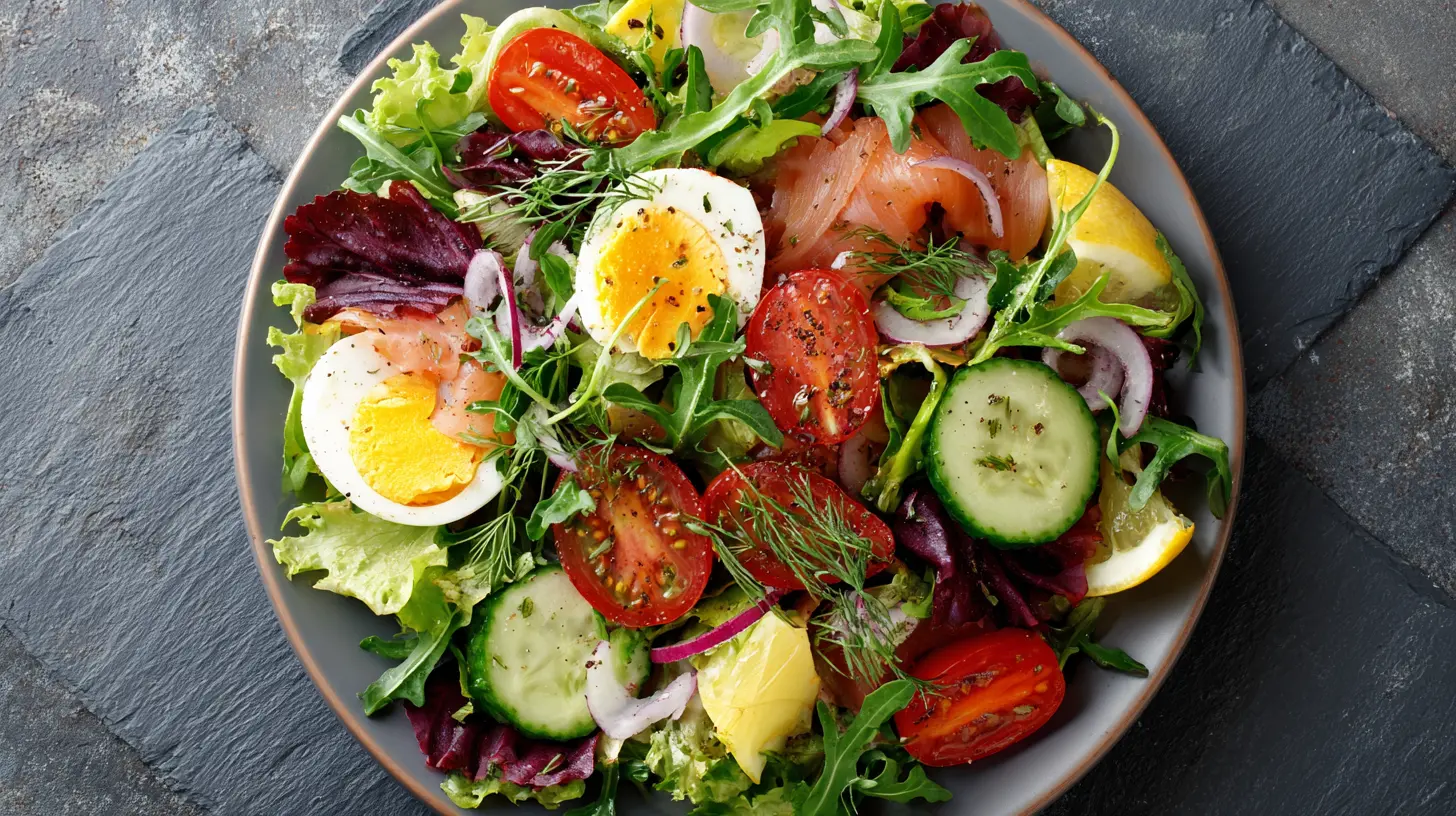
What Makes a Salad a Complete Meal
A complete meal, in nutritional terms, provides three things: adequate energy, a balance of macronutrients, and a reasonable spread of micronutrients. For most adults, that means a meal containing protein, fat, carbohydrate, and fiber in proportions that promote satiety and steady blood sugar.A salad becomes a complete meal when it meets those criteria without relying on a heavy dessert afterward to feel satisfied. The test is simple. Are you hungry again within two hours? If yes, the salad was incomplete. Did you feel sluggish or irritable an hour after eating? That often signals a meal that was too light on protein and fat, or too heavy on fast-digesting carbohydrates.
The most common failure point is protein. Leafy greens and most vegetables contain very little. Without a deliberate protein source, a salad is essentially a fiber and water delivery system. Fiber is valuable, but it does not build or maintain muscle, and it does not provide the sustained amino acid release that keeps hunger hormones in check.
Fat is the second frequent omission. People often choose fat-free dressings thinking they are being virtuous, but fat slows digestion and helps you absorb fat-soluble vitamins like A, D, E, and K from the vegetables themselves. A salad with no fat is less nutritious than one with a moderate amount of oil or avocado, even if the calorie count is lower.
Carbohydrate is the third piece, and it is where opinions diverge. Some people thrive on salads with a starchy component like roasted sweet potato, quinoa, or beans. Others prefer a lower-carb approach and rely on fibrous vegetables plus protein and fat. Both can work. The right choice depends on your activity level, metabolic health, and personal preference. What matters is that you make the decision consciously rather than defaulting to whichever option is easiest.
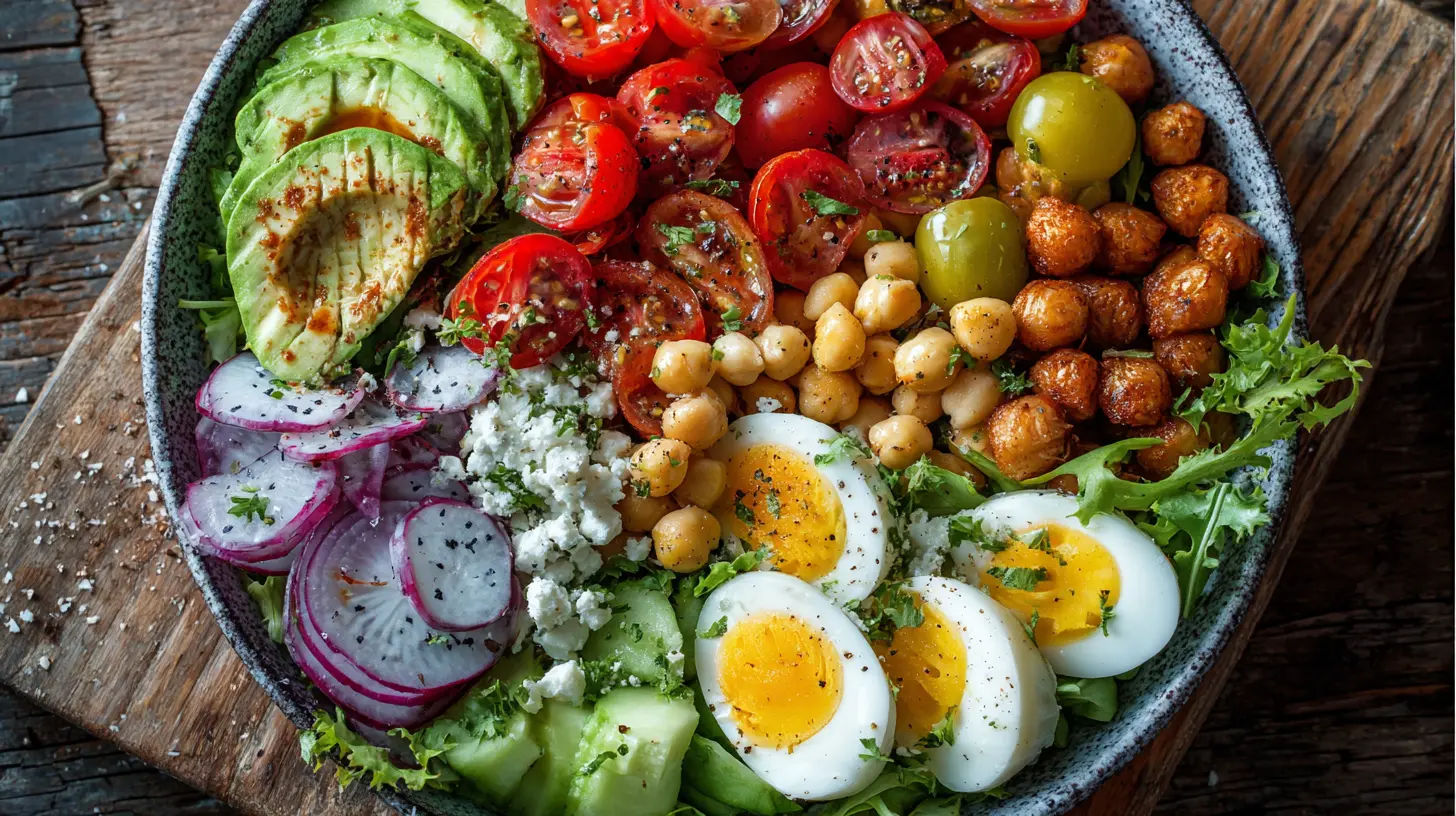
The Protein Problem and How to Solve It
Protein is the backbone of a satiating salad. Aim for a source that provides at least 20 to 30 grams per serving for a main meal. That is roughly the amount in a palm-sized portion of cooked chicken, a cup of edamame, or a cup and a half of Greek yogurt.Animal proteins are straightforward. Grilled chicken, sliced steak, shrimp, salmon, tuna, hard-boiled eggs, and leftover roast pork all work. The trade-off is preparation time. If you are assembling a salad at noon, you need protein that is already cooked or quick to cook. This is why batch cooking matters. Grilling extra chicken on Sunday and storing it in portions makes weekday salads realistic. Canned fish is a practical shortcut. Sardines, salmon, and tuna are shelf-stable, high in protein, and rich in omega-3 fats. They also carry strong flavors that stand up to bold dressings.
Plant proteins require a bit more thought because they often come packaged with carbohydrates or fiber. Lentils, chickpeas, black beans, and edamame are excellent choices. They provide protein plus fiber, which is a favorable combination for blood sugar control. Tofu and tempeh work well when marinated and pan-fried or baked. The trade-off with plant proteins is volume. You need a larger portion to hit the same protein target, which can make the salad bulky. That is not necessarily bad, but it changes the texture and the way the bowl feels in your stomach.
A common mistake is treating cheese as the protein source. Cheese does contain protein, but it also contains a significant amount of fat and sodium. A quarter cup of shredded cheddar provides about seven grams of protein. That is not enough to anchor a meal. Use cheese as a flavor accent, not as the primary protein.
Another mistake is relying on nuts and seeds as the main protein. They are nutritious and add texture, but a quarter cup of almonds provides about six grams of protein and a lot of fat. They are a supporting player, not the star.
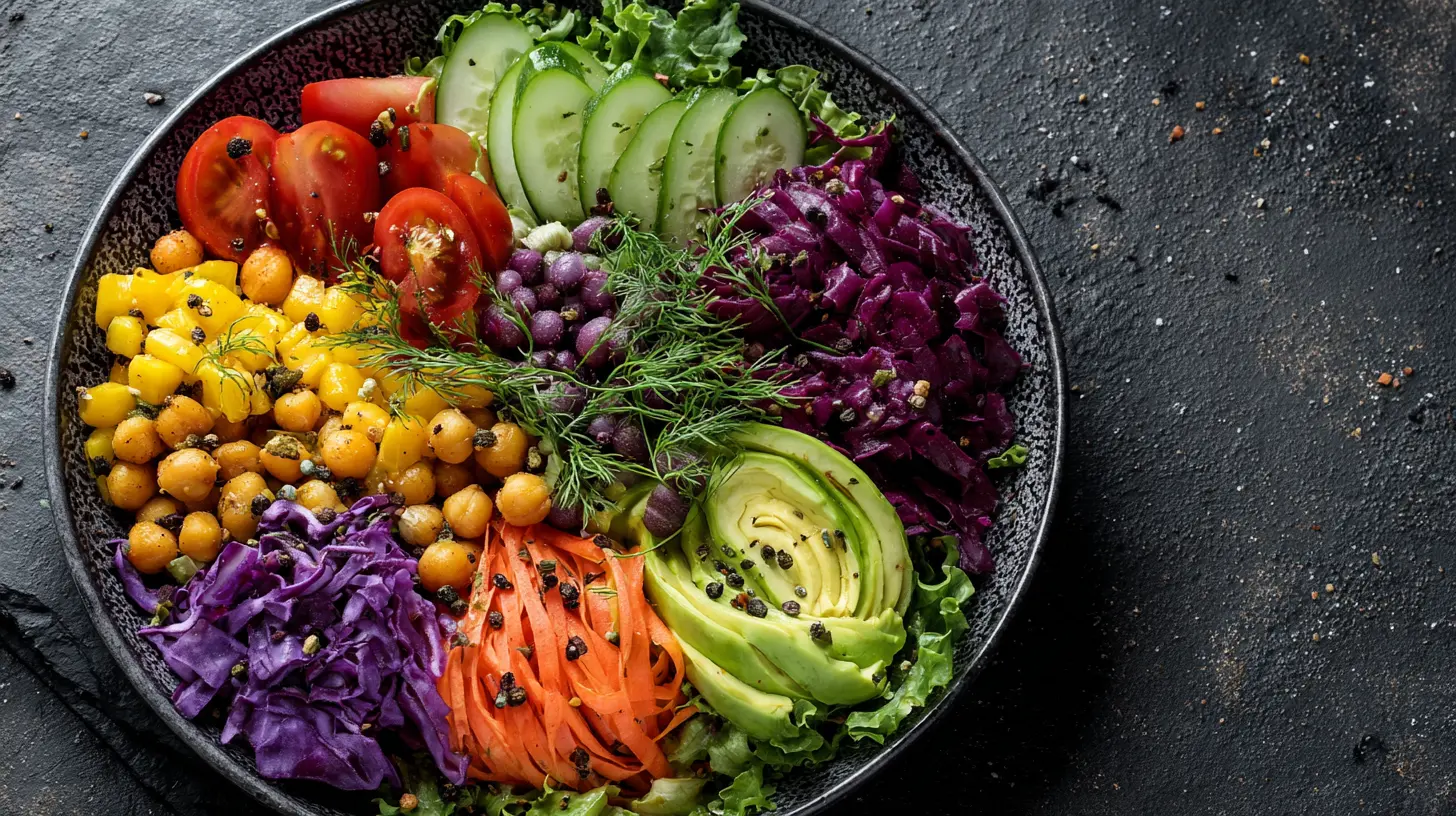
Fat: The Misunderstood Component
Fat has been demonized for decades, and the residue of that thinking still shows up in salad choices. People choose fat-free dressings, skip the avocado, and wonder why they are hungry an hour later. Fat is not the enemy. It is a necessary part of a satisfying meal.The practical question is which fats to include and how much. Olive oil, avocado, nuts, seeds, and fatty fish are all excellent sources. They provide essential fatty acids and help you absorb fat-soluble vitamins from the vegetables. A salad with no fat is nutritionally incomplete, even if it looks healthy.
The amount matters. A tablespoon of olive oil in a dressing is reasonable. Half an avocado is reasonable. A handful of walnuts is reasonable. What gets people into trouble is combining multiple fat sources without accounting for them. A salad with avocado, nuts, cheese, bacon, and an oil-based dressing will be delicious but very calorie-dense. That is not a problem if it fits your overall intake, but it is a problem if you are eating it under the assumption that salads are inherently low-calorie.
The type of fat also matters for flavor and satisfaction. A dressing made with extra virgin olive oil tastes different from one made with neutral oil. The former adds character. The latter adds calories without much flavor. Choose fats that contribute something beyond lubrication.
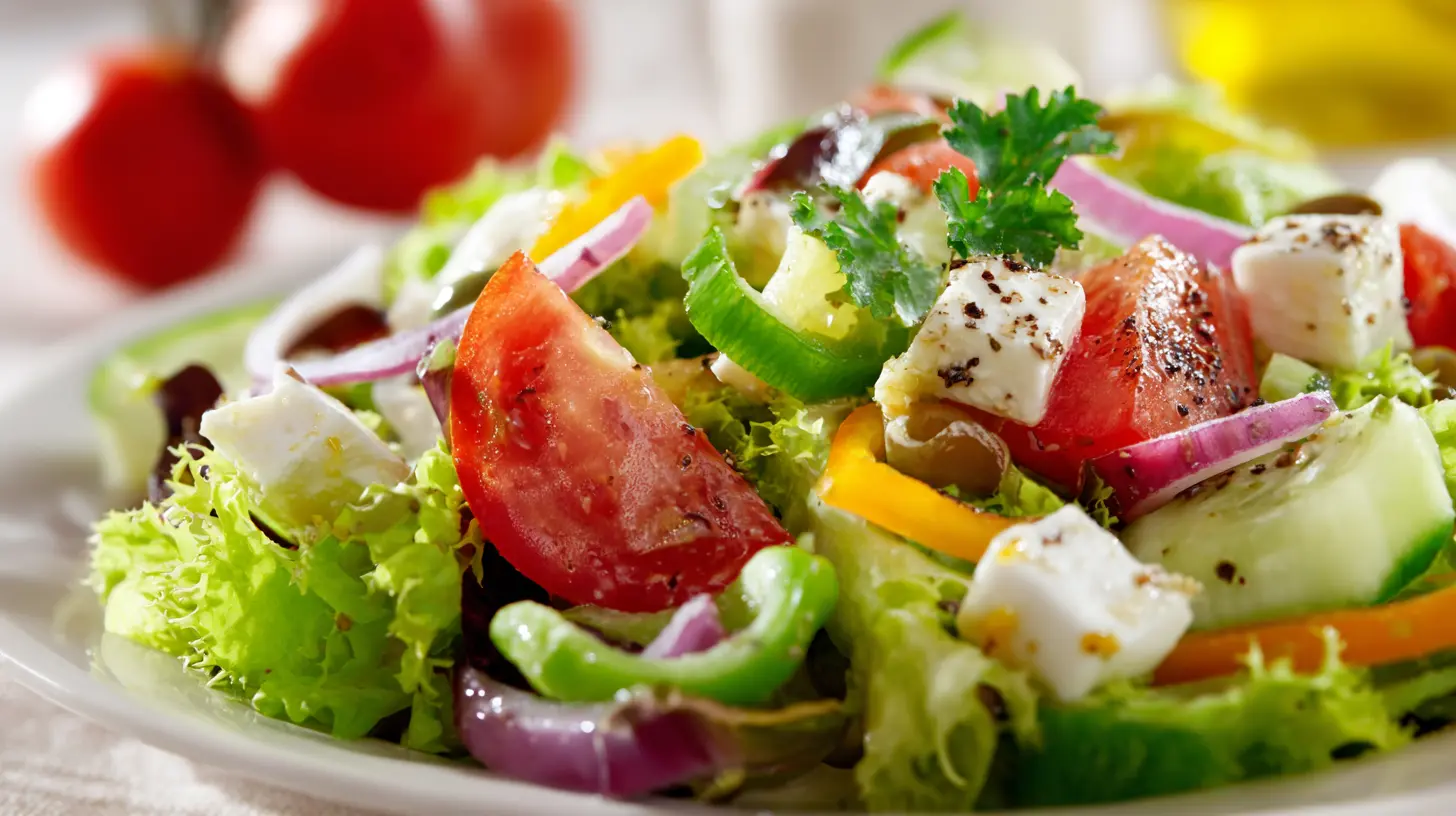
Carbohydrates: When to Include Them and When to Skip
Carbohydrates in a salad are a personal decision, but there are a few principles worth knowing.Starchy carbohydrates like roasted potatoes, sweet potatoes, corn, quinoa, rice, and pasta add energy and make the salad more filling. They are particularly useful if you are active, if you have a physically demanding job, or if you eat your salad as a post-workout meal. The trade-off is that they raise blood sugar more than fibrous vegetables do. For most people, that is fine, especially when combined with protein, fat, and fiber. For people with insulin resistance or diabetes, portion size and type matter more.
Fibrous carbohydrates come from the vegetables themselves. Leafy greens, broccoli, peppers, cucumbers, and tomatoes provide volume and fiber with minimal impact on blood sugar. They are the foundation of the salad and should not be skipped.
The mistake people make is treating carbohydrates as either forbidden or mandatory. Neither is true. A salad with no starchy carbohydrate can be a complete meal if it has enough protein and fat. A salad with a moderate amount of starchy carbohydrate can also be complete. The right choice depends on your body, your activity level, and what else you are eating that day.
One useful heuristic: if you are eating a salad for lunch and you have a long afternoon of mental work ahead, a small portion of starchy carbohydrate can help. If you are eating a salad for dinner and you plan to be sedentary, you may not need it. Neither choice is morally superior. They are just different tools for different situations.
Texture and Temperature: The Overlooked Elements of Satisfaction
Satisfaction is not just about nutrients. It is about the sensory experience of eating. A salad that is all soft textures, or all cold, or all one flavor, will feel monotonous even if it is nutritionally complete. Monotony leads to boredom, and boredom leads to eating something else afterward.Texture contrast is the easiest fix. Combine something crunchy with something creamy, something chewy with something crisp. Toasted nuts, seeds, crispy chickpeas, raw radishes, and shredded cabbage all add crunch. Avocado, soft cheese, and hard-boiled eggs add creaminess. The contrast makes each bite more interesting.
Temperature contrast is equally effective. A warm element on top of cold greens changes the entire experience. Grilled chicken, roasted vegetables, warm grains, or a fried egg can transform a salad from a chore into a meal. The warmth also releases aroma, which is a significant part of taste.
Flavor contrast matters too. Something salty, something acidic, something sweet, something bitter. A salad that hits multiple flavor notes feels more complete than one that is uniformly tangy or uniformly rich. A few pickled onions, a sprinkle of feta, a handful of dried cranberries, and a bitter green like radicchio can all coexist in the same bowl.
Dressing: The Difference Between Good and Great
Dressing is where salads are won or lost. A bad dressing can ruin good ingredients. A good dressing can make simple ingredients taste exceptional.The basic formula for a vinaigrette is three parts oil to one part acid, plus salt and something to emulsify. That something can be mustard, honey, or even a bit of mayonnaise. The acid can be lemon juice, vinegar, or citrus. The oil can be olive, avocado, or a neutral oil depending on the flavor you want.
The mistake people make is drowning the salad. A little dressing goes a long way, especially if you toss it thoroughly rather than pouring it on top. Tossing coats every leaf evenly and uses less dressing overall. If you are dressing ahead of time, keep the dressing separate and add it just before eating to prevent the greens from wilting.
Creamy dressings are heavier but can be satisfying in a different way. A yogurt-based dressing with herbs and lemon is lighter than a mayonnaise-based one and adds protein. A tahini-based dressing adds richness and a nutty flavor. The trade-off is calorie density. Creamy dressings tend to carry more calories per tablespoon, so portion awareness matters.
A practical tip: make dressing in a jar and shake it. It emulsifies better than whisking and stores easily in the refrigerator. A batch lasts a week and removes the friction of making it fresh every time.
Building Your Bowl: A Step-by-Step Framework
Here is a framework you can use to build a complete salad meal without measuring every ingredient.Start with a generous base of greens. Two to three handfuls per person is a reasonable starting point. Mix varieties for flavor and texture. Spinach, arugula, romaine, kale, and mixed greens all behave differently. Kale holds up to heavy dressings. Arugula adds pepperiness. Romaine adds crunch.
Add a protein source. Aim for a palm-sized portion of cooked meat, fish, eggs, tofu, tempeh, or legumes. If you are using legumes, a cup is a reasonable portion. If you are using eggs, two or three is reasonable.
Add a fat source. Half an avocado, a tablespoon of olive oil in the dressing, a handful of nuts, or a sprinkle of seeds. Choose one or two, not all of them.
Add a starchy carbohydrate if it fits your needs. A half cup of cooked grains, a small roasted sweet potato, or a half cup of beans. Adjust based on your activity level and hunger.
Add vegetables for volume and color. Tomatoes, cucumbers, peppers, radishes, carrots, and cabbage all work. The more variety, the more micronutrients you get.
Add flavor accents. Pickled onions, olives, capers, fresh herbs, cheese, or a sprinkle of something salty. These are small in quantity but large in impact.
Toss with dressing just before eating. Taste and adjust salt and acid.
This framework is flexible. You can swap ingredients based on what you have. The point is to include each category so the meal is balanced.
Common Mistakes and Misconceptions
Several myths about salads persist and lead people astray.The first is that salads are inherently low-calorie. They are not. A salad with avocado, nuts, cheese, and oil-based dressing can easily exceed 700 calories. That is not a problem if it is a meal, but it is a problem if you are eating it as a side and assuming it is light.
The second is that fat-free is better. Fat-free dressings often compensate with sugar and additives. They also reduce the absorption of fat-soluble vitamins. Moderate fat is better than no fat.
The third is that more toppings equal more nutrition. A salad with fifteen toppings is not necessarily healthier than one with six. It is just more complicated. Focus on the core categories and let the rest be optional.
The fourth is that salads must be cold. Warm salads, with roasted vegetables or grains, are just as valid and often more satisfying in cold weather.
The fifth is that salads take too long to make. They do if you are starting from scratch every time. They do not if you batch cook proteins and vegetables, wash greens ahead, and keep a jar of dressing in the fridge. Preparation is the difference between a salad habit that sticks and one that collapses after a week.
Real-World Examples
Consider a few examples that show how the framework works in practice.A Greek-style salad with grilled chicken, cucumber, tomato, red onion, olives, feta, and a lemon-oregano vinaigrette. The chicken provides protein. The feta and olive oil provide fat. The vegetables provide fiber and volume. There is no starchy carbohydrate, which is fine for a lighter meal. Add a half cup of quinoa if you need more energy.
A Thai-inspired salad with shredded cabbage, carrots, edamame, peanuts, cilantro, and a lime-peanut dressing. The edamame provides protein and fiber. The peanuts provide fat and crunch. The cabbage provides volume. Add a small portion of rice noodles if you want a more substantial meal.
A warm salad with roasted sweet potato, kale, chickpeas, red onion, and a tahini-lemon dressing. The chickpeas provide protein and fiber. The tahini provides fat. The sweet potato provides starchy carbohydrate. The kale holds up to the warm ingredients without wilting.
A breakfast salad with soft-boiled eggs, avocado, spinach, tomatoes, and a mustard vinaigrette. The eggs provide protein and fat. The avocado provides fat. The spinach and tomatoes provide fiber and micronutrients. This works well as a weekend breakfast or a light dinner.
Each of these examples follows the same framework. The ingredients change, but the structure is consistent.
Practical Tips for Making It a Habit
The biggest obstacle to eating complete salads regularly is friction. If making a salad requires cooking protein, washing greens, chopping vegetables, and making dressing from scratch every time, you will not do it consistently. Reduce the friction.Batch cook proteins on the weekend. Grill chicken, boil eggs, bake tofu, or cook a pot of lentils. Store them in portions so you can grab one and go.
Wash and dry greens as soon as you bring them home. A salad spinner helps, but even patting them dry with towels and storing them in a container with a paper towel works. Dry greens hold dressing better and last longer.
Keep a jar of dressing in the refrigerator. A basic vinaigrette lasts a week. Make a batch and use it throughout the week.
Prep vegetables in advance. Chop cucumbers, peppers, and carrots and store them in containers. Roast a tray of vegetables to add warmth and flavor during the week.
Keep shelf-stable protein on hand. Canned tuna, sardines, and salmon are useful for days when you have not batch cooked. So are roasted chickpeas and nuts.
Final Thoughts
A complete salad meal is not a complicated formula. It is a matter of including protein, fat, and fiber in proportions that satisfy you, and paying attention to texture, temperature, and flavor so the meal is enjoyable rather than dutiful. The framework is simple, but the execution requires a bit of planning. Once you have the habit, it becomes one of the most versatile and reliable meals in your rotation.The next time you make a salad, check it against the categories. Is there a clear protein source? Is there a fat source that helps you absorb nutrients and feel satisfied? Is there enough volume and variety to keep you interested? If the answer to all three is yes, you have a complete meal. If not, you know what to add.
all images in this post were generated using AI tools
Category:
Healthy SaladsAuthor:

Jackson Mahoney