Mindful Eating: How Salads Can Support Better Habits
29 November 2026
Most people approach a salad with a single goal in mind: eat more vegetables. That goal is fine as far as it goes, but it undersells what a salad can actually do. A salad is one of the few meals that asks you to slow down, assemble, taste, and adjust as you go. It is built from distinct components you can see and feel. It resists the kind of mindless shoveling that defines so many modern meals. In that sense, a salad is not just a vehicle for nutrients. It is a training ground for attention.
That is the angle worth taking seriously. Mindful eating is not a diet and it is not a wellness trend with a defined endpoint. It is a set of skills: noticing hunger and fullness, tasting what you eat, recognizing when you are eating for reasons other than hunger, and making deliberate choices without judgment. Salads, because of how they are structured and how they are eaten, happen to support nearly every one of those skills. But they only do so under certain conditions. A sad desk salad eaten in four minutes while answering emails teaches you nothing. A salad you build yourself, taste as you go, and eat without a screen in front of you can reshape how you relate to food over time.
This article looks at why that is, when it works, when it backfires, and how to use salads as a practical tool for building better eating habits rather than as a punishment disguised as a health food.
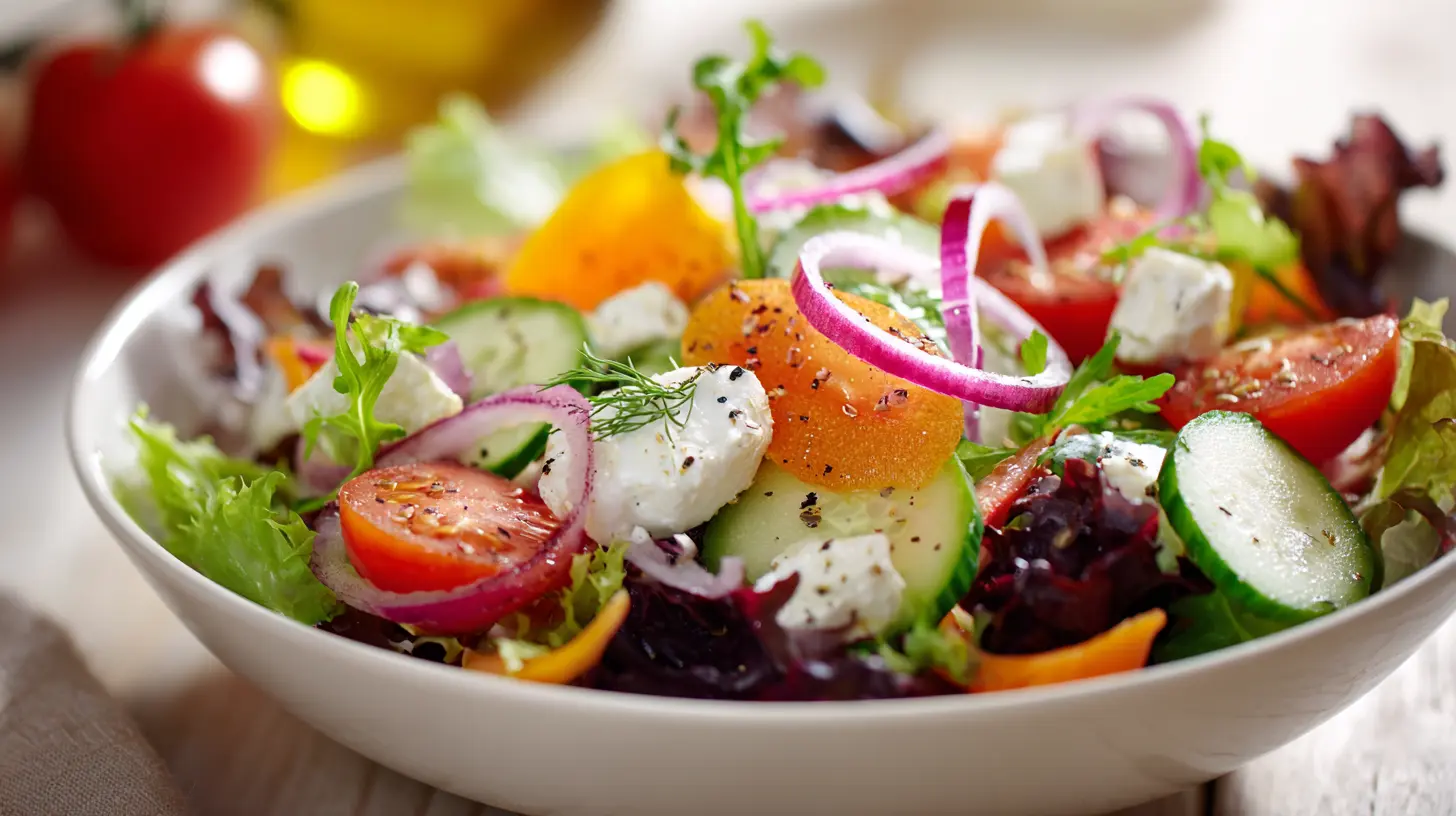
What Mindful Eating Actually Means
Before connecting salads to mindfulness, it helps to strip the term down. Mindful eating is the practice of paying attention to the experience of eating. That includes physical sensations like hunger, satiety, and taste, and also emotional and environmental cues like stress, boredom, social pressure, and the sight or smell of food.The core skills involved are straightforward:
- Interoceptive awareness: noticing what your body is telling you, including hunger, fullness, and specific cravings.
- Sensory attention: actually tasting food rather than consuming it on autopilot.
- Pace regulation: eating at a speed that allows your body's satiety signals, which lag behind consumption, to catch up.
- Non-judgmental observation: noticing your choices and patterns without turning them into a moral scorecard.
What mindful eating is not: a weight loss program, a rule set, or a requirement to eat slowly and silently at every meal. It is a practice, which means it is imperfect by design. The goal is more awareness, not perfect control.
This matters because a lot of salad culture runs directly against these principles. Salads are often framed as penance, as the thing you eat because you were "bad" yesterday, as a calorie delivery system rather than a meal. That framing is the opposite of mindfulness. It turns food into a transaction and strips away the sensory experience that makes eating satisfying. If you want salads to support better habits, the first step is separating the vegetable from the guilt.
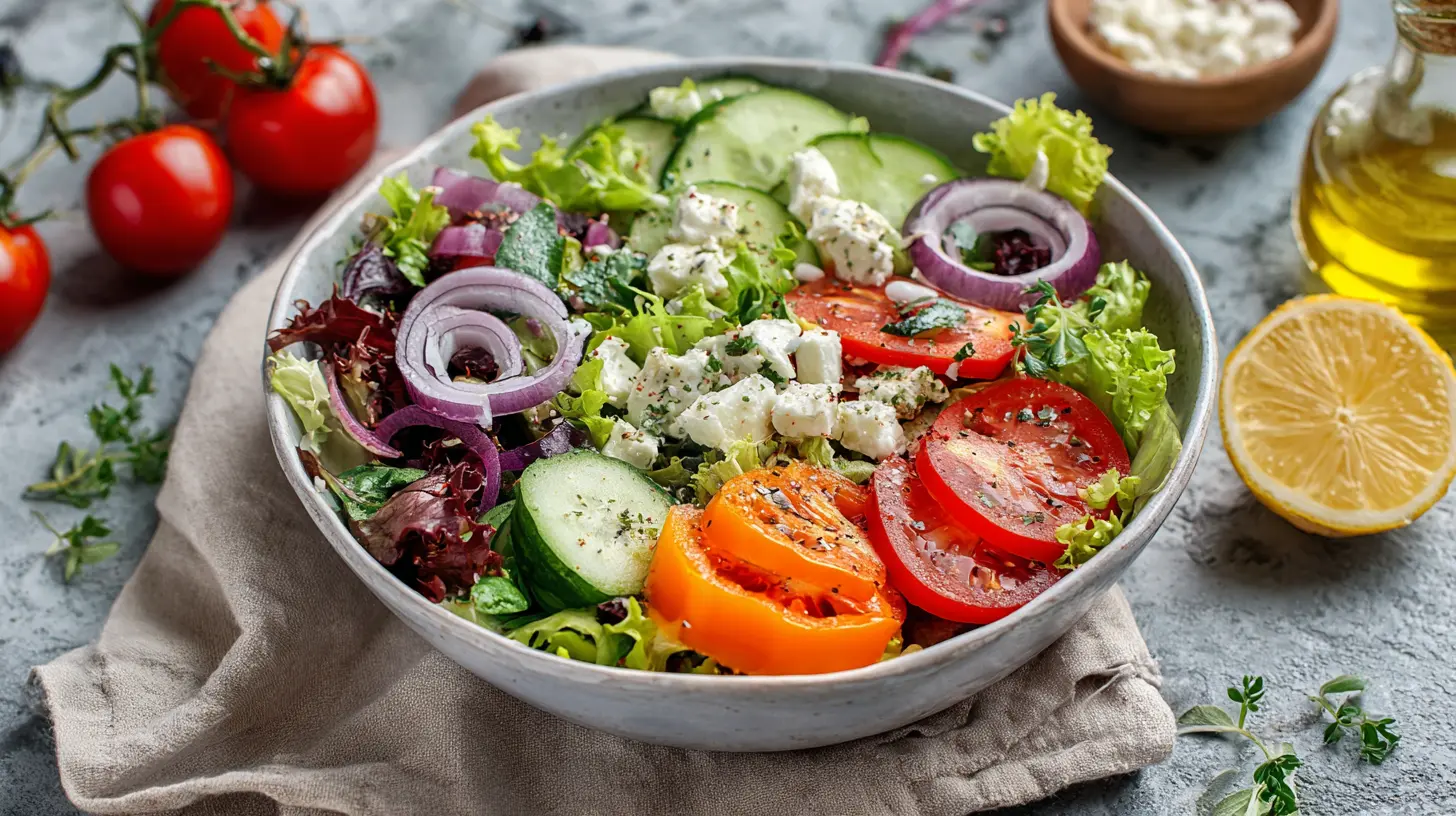
Why Salads Are Unusually Well Suited to Mindful Eating
Not every food supports attention. A bag of chips is engineered for the opposite: fast, salty, crunchy, and easy to eat without looking. A salad is structurally different in several ways that make it a natural fit for mindful practice.They are assembled, not just consumed
When you build a salad, you make a series of small decisions. Which greens? What crunch? What protein? What dressing, and how much? Each decision is a moment of contact with your food. You are handling ingredients, noticing textures, and adjusting ratios. That assembly process is itself a form of attention, and it happens before you take a single bite. Compare that to reheating a frozen meal or ordering from an app, where the food arrives fully formed and the only decision left is how fast to eat it.They engage multiple senses
Salads are visually varied. The colors, the contrast between crisp and soft, the smell of fresh herbs or toasted seeds, the sound of a crunch. That sensory variety gives your attention something to land on. Mindful eating is easier when the food itself is interesting. A plate of uniform beige food offers little to notice. A salad with bitter greens, sweet roasted vegetables, something salty, and something acidic gives you something to actually taste.They are eaten with more friction
This is a subtle but important point. Salads require more chewing than many processed foods. Leaves resist. Crunchy vegetables take work. That friction slows the pace naturally, and a slower pace gives your body time to register fullness. Satiety signals do not fire instantly; they build over the course of a meal. A salad's texture buys you some of that time without requiring willpower.They allow real-time adjustment
Because a salad is assembled from parts, you can taste as you go and adjust. Too acidic? Add a little oil. Too bitter? Add something sweet. This is a small thing, but it reinforces a mindset of tuning in rather than pushing through. You are learning to notice what the food needs and respond to it, which is the same muscle you use to notice what your body needs.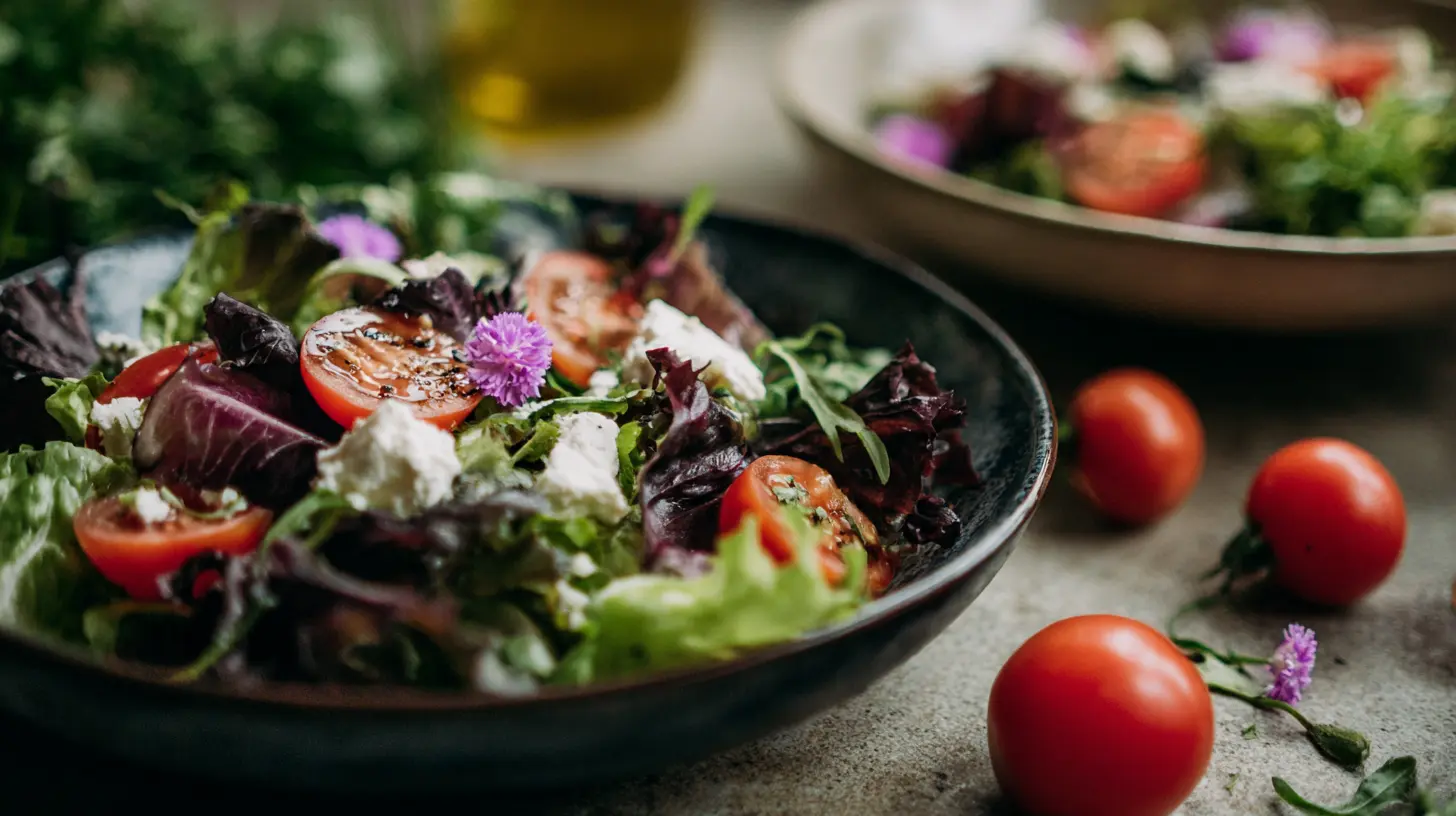
The Satiety Question: Why Some Salads Leave You Hungry
Here is where the honest conversation starts. Plenty of people eat a salad and feel hungry an hour later. That is not a failure of willpower. It is usually a failure of construction, and it is worth understanding why because it determines whether salads actually support better habits or quietly undermine them.A salad made of lettuce, cucumber, and a light vinaigrette is mostly water and fiber with very little protein or fat. It fills your stomach temporarily but does not trigger the hormonal signals that produce lasting satiety. Protein and fat are the macronutrients most strongly associated with feeling full, and fiber contributes by slowing digestion and adding bulk. A salad missing protein and fat is a volume play, not a satiety play.
The practical fix is not complicated, but it requires intention:
- Anchor with protein. Grilled chicken, fish, eggs, beans, lentils, tofu, tempeh, or cheese. A salad without a protein anchor is a side dish wearing a main course costume.
- Include fat deliberately. Olive oil, avocado, nuts, seeds. Fat carries flavor and contributes to satiety. Fat-free dressing is often a false economy because it makes the salad less satisfying and harder to eat.
- Use fiber with substance. Leafy greens are good, but add legumes, roasted root vegetables, or whole grains. These add bulk that lasts.
- Watch the sugar in dressings. Sweet dressings can make a salad taste great but spike and crash your energy, which can trigger rebound hunger.
There is a trade-off here. A heartier salad with protein, fat, and grains has more calories than a bare greens salad. If your goal is purely caloric reduction, that matters. But if your goal is sustainable habits, a salad that actually satisfies you is the one you will keep eating. A salad that leaves you raiding the pantry an hour later has not helped anyone.
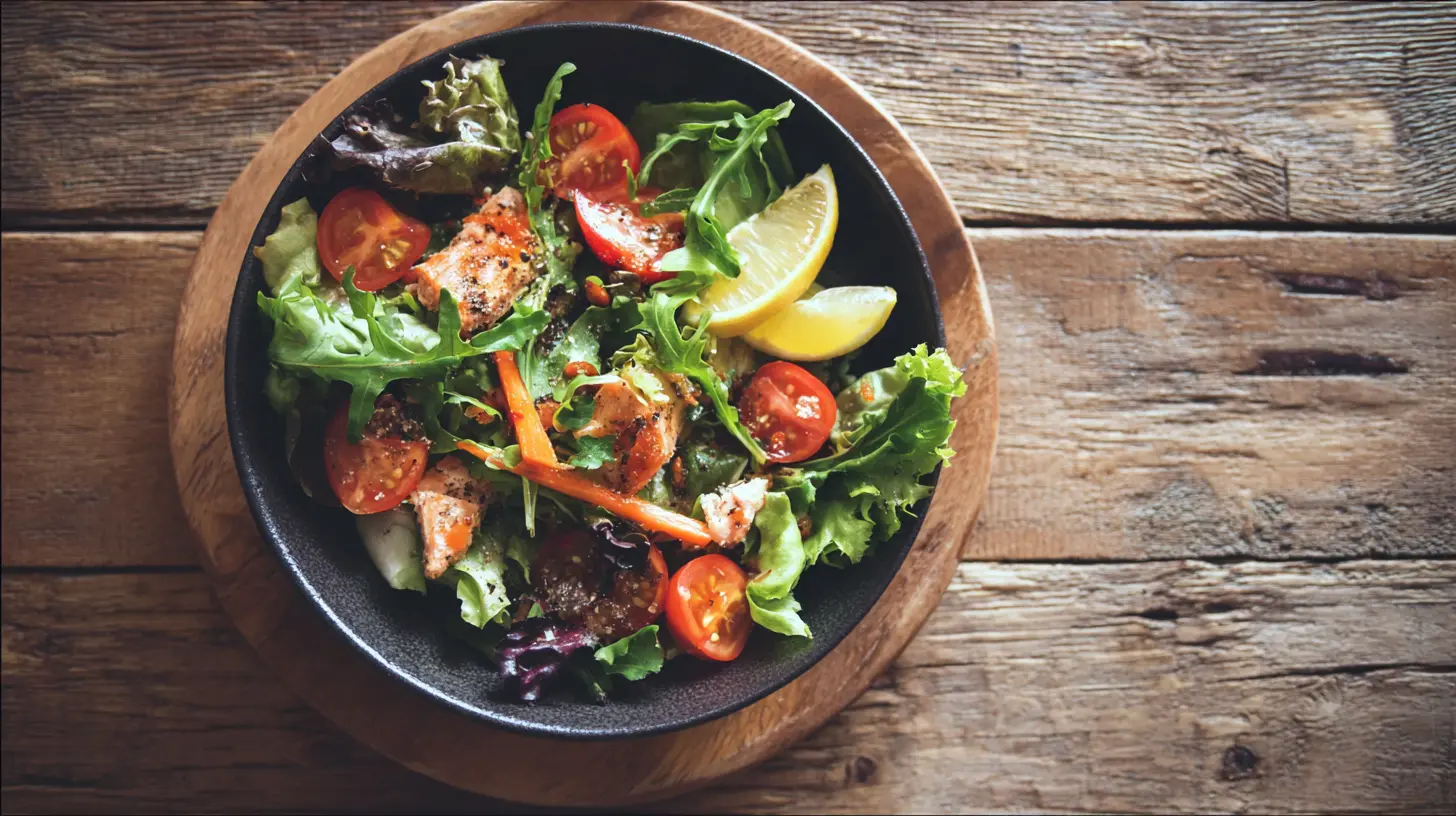
The Pace Problem and How Salads Solve It
One of the most reliable findings in eating behavior research, stated carefully because the science is nuanced, is that eating faster tends to correlate with eating more. The mechanism is intuitive: your body's fullness signals take time to reach your brain, and if you eat faster than those signals can arrive, you overshoot. Mindful eating addresses this directly by encouraging a slower pace.Salads help with pace for reasons that are partly mechanical and partly psychological. Mechanically, the chewing required by raw vegetables and sturdy greens slows you down. Psychologically, a salad is often eaten with a fork from a bowl, which is a slower delivery system than a sandwich or a handful of something. And because salads are visually complex, there is more to notice, which naturally pulls attention back to the food.
But pace is not automatic. You can absolutely inhale a salad. The tool only works if you let it. A few practical habits make the difference:
- Put the fork down between bites, at least some of the time.
- Take a breath before the first bite and actually look at what you made.
- Avoid eating while scrolling, working, or watching television. Divided attention is the enemy of pace.
- Notice the midpoint of the meal. Are you still hungry? Has the food stopped tasting as good? That pause is where mindful eating lives.
Common Mistakes That Turn Salads Into a Trap
Salads have a reputation problem, and much of it is earned. Here are the patterns that most often undermine their value as a habit-building tool.Treating salad as punishment
If a salad is what you eat after a "bad" day, you are encoding a belief that food is a moral ledger. That belief tends to produce a cycle: restriction, then rebellion, then guilt, then restriction again. Salads work better as a default you enjoy than as a sentence you serve.Drowning a good salad in dressing
Dressing is where salads quietly become calorie bombs. Creamy dressings, honey mustard, and sweet vinaigrettes can add hundreds of calories and a lot of sugar. This is not a reason to avoid dressing; a salad with no dressing is often unpleasant and unsustainable. The point is to dress deliberately. Oil and vinegar on the side, added gradually, gives you control and lets you taste the difference.Assuming salad equals healthy
A salad topped with fried chicken, bacon, croutons, and ranch is a salad in name only. That does not make it bad, but it does mean the word "salad" tells you nothing about nutrition. Judge the bowl by its components, not its label.Eating the same salad every day
Variety is not just a nutritional principle; it is a mindfulness principle. Novelty engages attention. Monotony breeds autopilot. If you eat the identical salad five days a week, you will stop tasting it by Wednesday. Rotating greens, proteins, and dressings keeps the meal interesting and keeps you present.Skipping the salad when you are rushed
This is the most common real-world failure. Salads take time to assemble, and on a busy day they are the first thing to go. The fix is preparation, not guilt: wash and dry greens in advance, keep prepped vegetables in the fridge, and batch-cook proteins. A salad you can assemble in five minutes is a habit. A salad that requires twenty minutes of chopping is a special occasion.
Building a Salad That Supports Attention
If the goal is a salad that satisfies, nourishes, and keeps you present, there is a useful framework. Think in layers rather than recipes.The base. Choose greens with flavor and texture. Arugula, spinach, kale, romaine, butter lettuce, and mixed greens all behave differently. Bitter greens like arugula and radicchio wake up the palate and pair well with something sweet. Softer lettuces are gentler and work with delicate dressings.
The crunch. Raw vegetables, toasted nuts, seeds, or a small amount of something crispy. Texture contrast is a large part of what makes a salad satisfying to eat, and it gives your attention something to track.
The anchor. Protein, as discussed. This is what separates a meal from a garnish.
The bulk. Roasted vegetables, legumes, whole grains, or starchy vegetables. These add substance and fiber and make the salad feel like a meal.
The accent. Something acidic, something salty, something sweet, something herby. A squeeze of lemon, a few olives, a little fruit, fresh herbs. These are the details that make a salad taste like it was made on purpose.
The dressing. Oil and acid, seasoned properly. Add it gradually and taste as you go. This is the single best moment for mindful adjustment.
The order matters less than the presence of each layer. A salad missing crunch is boring. A salad missing an anchor is unsatisfying. A salad missing acid is flat. Once you internalize the layers, you can build a good salad from whatever is in the fridge, which is exactly the kind of flexible skill that survives a busy week.
Mindful Eating Beyond the Bowl
It would be dishonest to suggest that salads alone will transform your relationship with food. They are a tool, not a cure. But the skills you practice while building and eating a salad transfer to everything else.When you get used to tasting as you go, you start noticing when other meals are underseasoned or oversalted. When you get used to pausing mid-meal, you start noticing fullness earlier in other contexts. When you get used to assembling food with intention, you start noticing how often you eat food you did not choose, whether from a vending machine, a drive-through, or a plate someone else filled.
This is the real argument for salads as a habit anchor. They are a low-stakes daily rehearsal for attention. You do not need to be perfect at it. You just need to do it often enough that the skills become familiar.
When Salads Are Not the Right Tool
Balance requires acknowledging the limits. Salads are not the right choice for everyone or every situation.If you have a history of disordered eating, rigid food rules, or a tendency to use food as punishment, a salad-centric approach can reinforce harmful patterns. In that case, the priority is professional support, not more vegetables. A salad is not medicine for a complicated relationship with food.
If you are in a phase of life where meals are chaotic and time is scarce, a salad that requires extensive prep may add stress rather than reduce it. Simpler wins, like adding a handful of greens to whatever you are already eating, may serve you better.
And if you simply do not like salads, forcing them is counterproductive. Mindful eating is about attention and enjoyment, not compliance. There are many ways to eat vegetables and many ways to practice attention. A stir-fry, a soup, or a grain bowl can do the same work.
Practical Starting Points
If you want to use salads to build better habits, start small and specific.Pick one meal a week to build a salad deliberately. Shop for it. Assemble it slowly. Taste as you go. Eat it without a screen. Notice when you feel full. Do not worry about whether it was the healthiest possible salad. Worry about whether you were actually there for it.
Over time, expand. Keep prepped components in the fridge so the habit survives busy days. Rotate your ingredients so you do not go numb to the meal. And pay attention to how you feel afterward, not just in terms of fullness but in terms of energy, mood, and satisfaction. That feedback loop is the whole point.
The salad is not the goal. The attention is. The salad is just a very good place to practice it.
all images in this post were generated using AI tools
Category:
Healthy SaladsAuthor:

Jackson Mahoney
Discussion
rate this article
1 comments
Sage McGlynn
Mindful eating through salads offers a practical approach to healthier habits. By focusing on fresh ingredients and textures, individuals can cultivate awareness of their choices. This practice not only enhances enjoyment but also fosters a deeper connection to nutrition.
November 29, 2026 at 5:16 AM